Showing posts with label school. Show all posts

Saturday, January 9, 2010

The Nursing of Saint Sebastian - Dirk van Baburen


Dirck Van Baburen
The Nursing of Saint Sebastian - 1622

Wednesday, January 6, 2010

Leonardo da Vinci - Story life - part 1


Leonardo da Vinci was the embodiment of the "Renaissance man", a man who had attained mastery over all branches of art and science.
He was a painter, sculptor, architect and engineer besides being a scholar in the natural sciences, medicine and philosophy.
Leonardo is probably most famous for painting the Mona Lisa, which is one of the world's best-known and most widely recognized works of art.
Leonardo da Vinci was born on the 15th of April, 1452, as the illegitimate son of the notary Ser Piero di Antonio da Vinci and a peasant woman named Caterina
in a small town called Vinci, near Empoli, Tuscany.
Although last names were already in use in Europe at the time, Leonardo never had one. His full name "Leonardo di ser Piero da Vinci" means "Leonardo son of Piero from Vinci."

Tuesday, December 8, 2009

His Last Supper - Leonardo Da Vinci


Painting by Leonardo Da Vinci, 1498

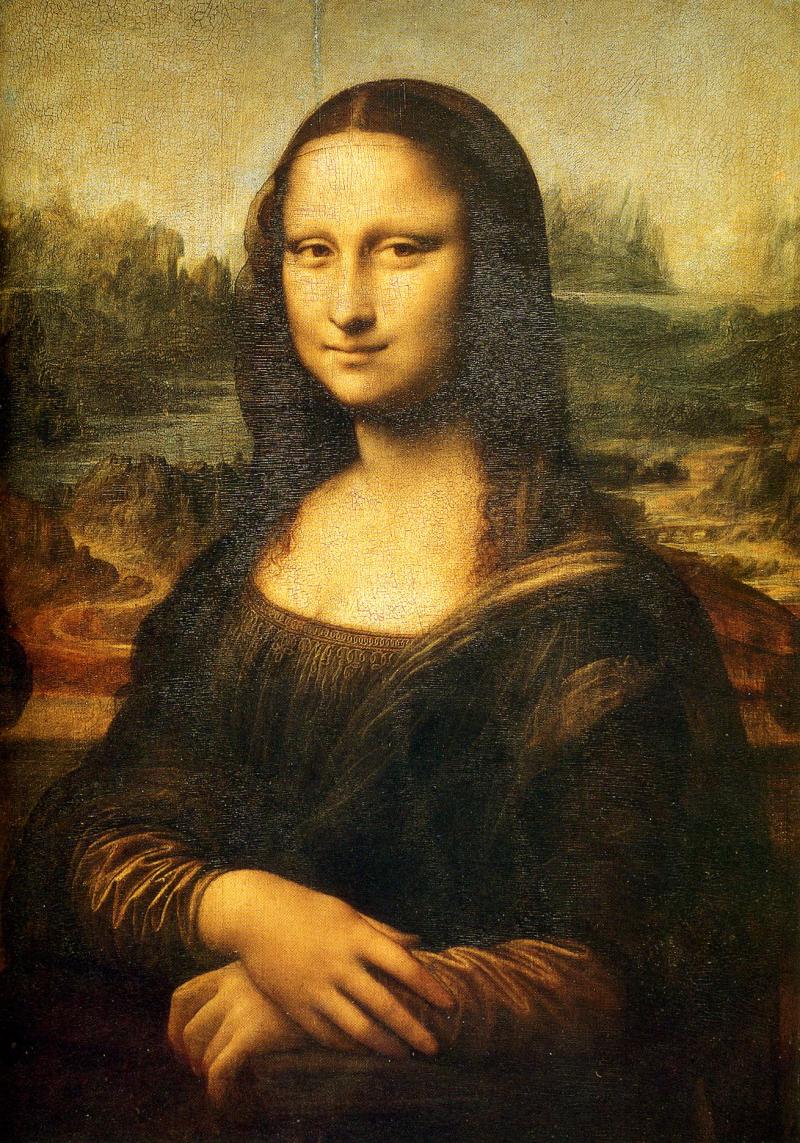
Mona Lisa


Portrait of Mona Lisa (1479-1528), also known as La Gioconda, the wife of Francesco del Giocondo; 1503-06 (150 Kb); Oil on wood, 77 x 53 cm (30 x 20 7/8 in); Musee du Louvre, Paris

Michelangelo works - part1


Michelangelo Buonarroti was born in 1475 in Florence, Italy, and came
into his own at the height of the Renaissance.
For an artist of his talent and abilities, it was simply perfect timing.
Like his contemporary and rival Leonardo da Vinci, Michelangelo had a wide range of talents, including architecture, sculpture, painting, and poetry, all of which
he used prolifically during the course of his life.
The tasks he undertook were immense, many of them taking several years to complete.
If for no other reason, the sheer scale of some of his projects
(most notably the Sistine Chapel) is enough to prove Michelangelo’s place in history.

Wednesday, December 2, 2009

Parmenides of Elea - Philosophers


Parmenides of Elea was a younger contemporary of Heraclitus of Ephesus, but he lived at the opposite end of the Greek world: in Italy.
Both men were intrigued by the immense variety of phenomena, but where Heraclitus discerned order in the chaos, Parmenides pointed out that the endless
variety and eternal changes were just an illusion.
In a long poem, which partially survives, he opposed 'being' to 'not being', and pointed out that change was impossible, because it would mean that something that was 'not being' changed into 'being', which is absurd.
In other words, we had to distrust our senses and rely solely on our intellect.
The result was a distinction between two worlds: the unreal world which we experience every day, and the reality, which we can reach by thinking.
This idea was to prove one of the most influential in western culture.

Portrait bust of Epicurius - Louvre Museum


Epicurius lived from approx 341 - 270 BC was an ancient Greek philosopher and
the founder of the school of philosophy
called Epicureanism.

Apollo in the louvre museum


In Greek and Roman mythology, Apollo is one of the most important of all the deities.
Apollo has been variously recognized as a god of light and the
sun; truth and prophecy; archery; medicine and healing; music, poetry, and the arts; and
more.
Apollo is the son of Zeus and Leto, and has a twin sister, the chaste huntress Artemis.

Sunday, November 29, 2009

Nice city - franch


Nice is a city in southern France located on the Mediterranean coast, between Marseille, France, and Genoa, Italy, with 347 060 inhabitants in the 2006 estimate.
The city is a major tourist centre and a leading resort on the French Riviera
It is the historical capital city of the County of Nice .

Lyon - france


Often described, even by the Parisians, as being like Paris but without the crowds
France’s second city, Lyon, is a chic metropolis but with a style and frenetic pace all of its own.
Built on the confluence of the Rhône and the Saône rivers, the city has been an important centre since Roman times, clustered around the ancient Vieux Lyon district and the baffling warren of traboules
the former heart of the silk industry. Beyond the city limits lie the rich heartlands of French gastronomy and the winelands of Beaujolais, Burgundy
and Côtes du Rhône, providing Lyon with some of the finest of fine dining.
When it comes to food, Lyon is second to none.
Literally Lyon
La Croix-Rousse in Vieux Lyon was the centre of Lyon’s silk industry, criss-crossed by narrow traboules (alleyways)
once used by the silk workers to transport their precious cargo down to the river barges.
Lyon is still a good place to buy silk scarves.

Saturday, November 28, 2009

Haut-Koenigsbourg Castle


Haut-Koenigsbourg Castle, one of the most visited monuments is located in Orschwiller, Alsace, France. It is situated in the Vosges Mountains
and it occupied a strategic position when it was built back in the twelfth century.
The main purpose was to protect the wine
and the wheat routes to the north, and the silver and the salt routes from west to east.
There is a collection of medieval weapons
in the basement of the castle which includes crossbows, swords
and armors of different kinds. Inside the buildings the rooms are extremely impressive as the walls are covered with sculptures and paintings along with striking furniture.
The castle was built
in the twelfth century over the previous ruins which date back to the roman period.
The castle was burnt down in the fifteenth century but it was quickly reconstructed.
During the Thirty Years War, the castle was again burnt down
but this time it took centuries to complete its reconstruction.
In the present day, Haut-Koenigsbourg Castle seems like it sprang
out of the mythical past with ancient force.
The castle is one of the symbols of the Alsatian heritage and a perfect witness for European culture. Visitors will definitely
have an ideal environment to understand the castle architecture of middle ages.

Friday, November 27, 2009

Chartres Cathedral


The Chartres Cathedral of France is situated in Chartes
about eighty kilometers southwest of Paris.
It is one of the best & most famous churches in the entire France.
It is counted third best among the Gothic style of architecture.
It’s full name is the Cathedral of Our Lady of Chartres.
It is a beautiful sight to see from a distance, between the wheat fields and only when tourists come closer to the church, it stands on the top of the hill and stands out in beauty.
The Chartres Cathedral was built in the 16th century and it has two Spires
the first one is 349 feet and the other is 377 feet tall.
As far as the history of the cathedral goes, this cathedral was said to be the most imperative building in the city. It acted as a big landmark for the local public
and also for the nearby visitors. All important activities were entered around the cathedral. Sometimes during the middle age, the cathedral worked as the market place.
In the middle of all this, the priests however were always against the cathedral being used as a market place.
So much so, that they did not allow people selling wine in the crypt.
The cathedral was a common assembly point for different kinds of workmen to find jobs for themselves.
The Chartres Cathedral is one of the most visited Gothic churches in the entire France.
The Chartres was a place where pilgrims used to come
quite often and during older days, the church used to be a hospital to take care of the sick.

Olhain - north of France


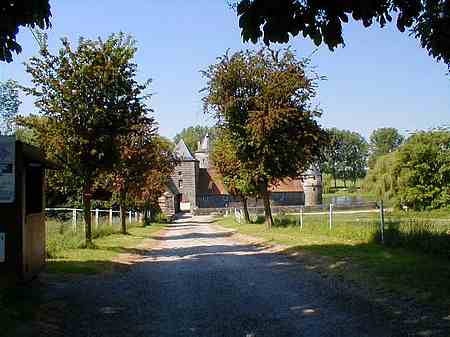
he Olhain park is close to Lille and Arras and is perfect for a day trip.
The park provides you with the opportunity to escape the cities and enjoy the outdoor.
Thanks to its 450 hectares of forest ( 300 of which are national forest )
its numerous sports and leisure activities equipments (golf, tennis, swimming pool, brasserie, camping-site...)
and its festive animations (exhibitions, shows, meetings...)
Olhain Park constitutes a must as the Leisure Activities destination .
There are many walking paths (hiking or mountain bike)
a particularly rich and varied flora and fauna which will succeed to seduce the nature lovers.

Lille - north of France


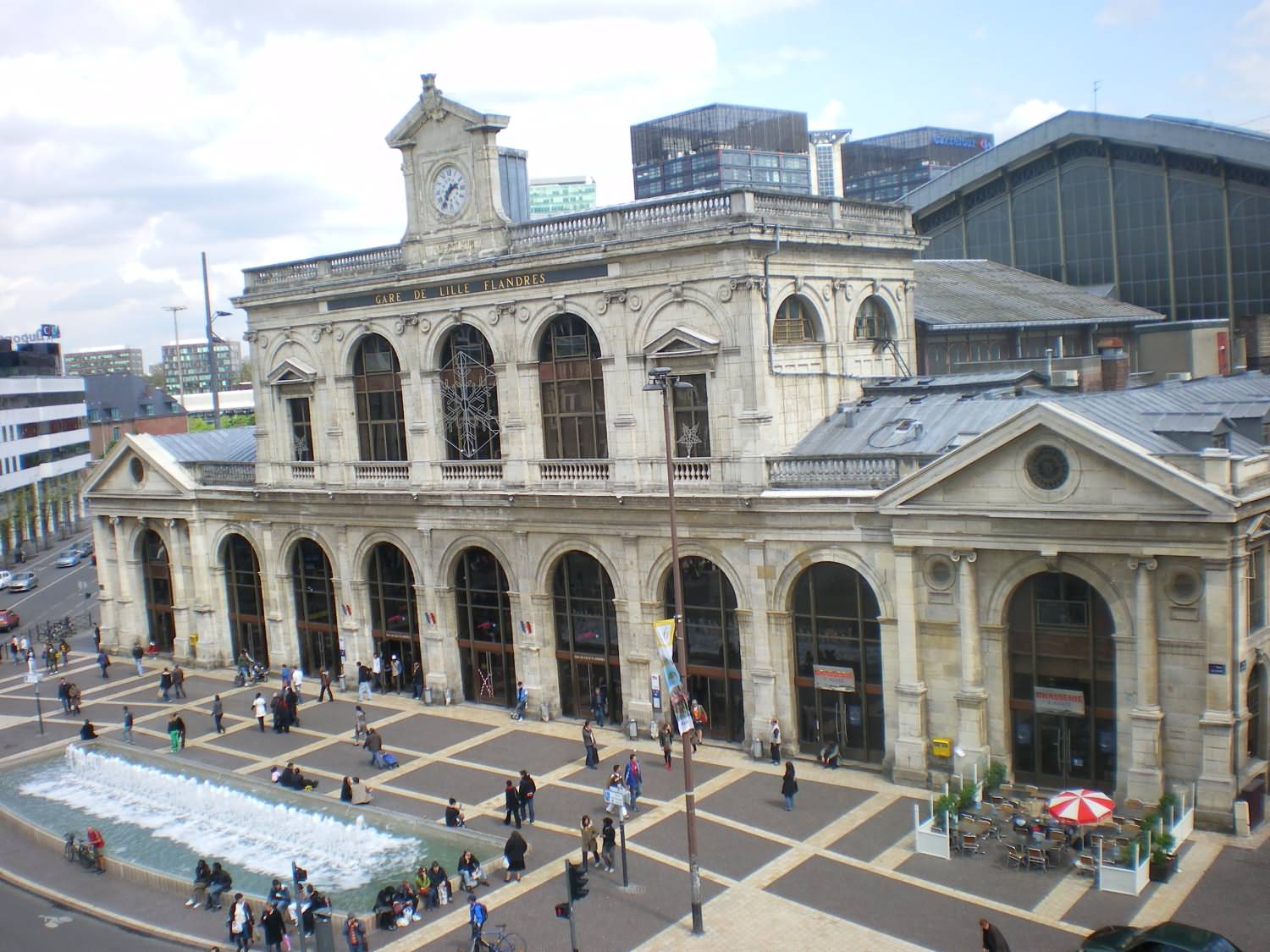
To many people thinks that Lille sounds like a boring, industrial, coal mining town.
Are they in for a suprise! Lille has got a vey nice historic centre
with old houses and mansions that look like those of Brussels or Amsterdam,
Although the North of France still suffers high unemployemnt rates, this region is getting back to its feet. Lille is becoming an important regional hub again
with fast trains connecting it to Brussels, Paris and London.
Lille has been designated a "European City of Culture" for 2004.

Arras - France


Arras, the birthplace of Robbespierre, has an historic centre
with many houses going back to the 17-th and 18-th century.
The town hall, the grand square and the range of narrow
houses with underground passages are great for a sight seeing tour.
Other sights include the Petite Place (boarded with Flemish typical houses)
the belfry (rebuilt after the First World War)
the Saint-Vaast’s palace (ancient abbey church of the 18th century)
the cathedrale and the house of Robespierre.

Taita Falcon


The Taita Falcon is one of the smallest Falcons in the Southern African Sub-region.
It was first found in the Taita Hills of Kenya whence comes its name.
It is spread throughout the eastern portion of subsaharan Africa but is mostly found in Kenya.
There are a few nesting sites in Zimbabwe and Northeastern South Africa.
It is also rather scarce and relatively endangered.
In Southern Africa itself, there are a few regular breeding sites where
the birds can regularly be found.

Sunday, November 22, 2009

Prairie Falcon - INTERESTING FACTS


MEASUREMENTS: The Prairie Falcon has a body length of 15 - 20 inches, a 3 1/2 foot wingspan, and weighs 1 - 2 pounds.
HABITAT: Prairie Falcons inhabit hills, canyons, and mountains of arid grasslands
and shrub-steppes of southwestern Canada, western United States, Baja California, and northern Mexico.
DIET: The primary food of Prairie Falcons is small mammals, especially ground squirrels, but they will also hunt birds, reptiles, and insects.
This falcon actively searches for prey during flight. Prairie Falcons catch prey on or close to the ground after a low angled swoop from above.
REPRODUCTION: Typically, Prairie Falcons nest on a cliff face using a ledge, cavity, crevice, or an abandoned nest of eagles, hawks, or ravens. Prairie Falcons lay 3 - 6 eggs with an incubation time of about 34 days. Young falcons leave the nest 5 - 6 weeks after hatching.
NAME DERIVATION: The scientific name comes from the Latin word falco, meaning hook-shaped (falcate) and may refer to the beak and claws, and the Latinized name for Mexico, where the bird was first collected for scientific study. The common name mistakenly refers to the habitat in which this bird may be found.
True prairies are mostly outside this bird’s range.
INTERESTING FACTS:
- Prairie Falcons are probably just as fast as Peregrine Falcons, but do not typically use the same hunting strategy.
-Prairie and Peregrine Falcons are similar in size and can be distinguished from each other by color. The Prairie Falcon is brown and has dark “armpits” or dark patches under
the wings, while the Peregrine is blue-gray and has a uniform underwing color pattern.

Prairie Falcon


The Prairie Falcon is a medium-sized falcon of western North America.
It is about the size of a Peregrine Falcon or a crow, with
an average length of 40 cm , wingspan of 1 metre , and weight of 720 g (1.6 lb). As in all falcons, females are noticeably bigger than males.