Showing posts with label Portrait. Show all posts

Monday, January 25, 2010

Captian John Pratt, Middletown, Connecticut - ralph earl


Artist : Ralph Earl
Painting : Captian John Pratt, Middletown, Connecticut

Captain Elijah Dewey - ralph earl


Artist: Ralph Earl
Painting : Captain Elijah Dewey

Benjamin S. Judah- ralph earl


Artist : Ralph Earl
Painting : Benjamin S. Judah

Baron von Steuben - ralph earl


Artist : Ralph Earl
Painting : Baron von Steuben

Ann Whiteside Earl - ralph earl


Artist : Ralph Earl
Painting : Ann Whiteside Earl

Admiral Richard Kempenfelt - ralph earl


Artist : Ralph Earl
Painting : Admiral Richard Kempenfelt

A Master in Chancery Entering the House of Lords


Artist : Ralph Earl
Painting: A Master in Chancery Entering the House of Lords

A Gentleman with a Gun and Two Dogs - ralph earl


Artist : Ralph Earl
Painting : A Gentleman with a Gun and Two Dogs

Portrait of a Man with a Gun is a full-length portrait of a hunter.
He stands in the right half of the painting, facing three-quarters left. His head also is turned three-quarters left, and he looks at the viewer.
In his right hand he holds a black hat that is lined with blue fabric and a brown band; he extends it in a gesture that nearly reaches the right edge of the painting.
In his left hand he holds a rifle that balances on a diagonal from lower right to upper left and crosses in front of his other arm at the elbow.
The large format seems to have posed a challenge to Earl in that the
head is disproportionately small and the arms too long and slender.
The subject’s powdered hair is pulled back and apparently gathered in a queue; there is a single tight curl visible above his left ear.
He wears a white stock and bow and an orange, spotted waistcoat that is edged with a double row of gold braid and decorated with two rows of small gold-colored buttons.
He also has on a red coat with large, silver-colored buttons.
His buff-colored breeches are fastened at the knee with cloth-covered buttons of the same color and tucked into knee-high boots that are dark brown at the top and black
from the calf to the toe.
The man is accompanied by two hunting dogs, whose heads are turned in the direction of his gesture. The dog on the left, its back to the viewer, is placed on a diagonal from the bottom-left corner toward the middle of the image.
This animal has a dark gray head and ears and a large gray spot on the back of its neck; its coat is mottled gray and white.
The other dog stands in profile behind its master, its neck extended and facing left.
This canine has reddish-brown markings on its head and back and a similarly spotted coat.
The man and dogs appear in the clearing of a wooded landscape.
Gently curving lines of trees recede along the left and right sides; a single tree stands just behind and to the right of the hunter.
The sky has large gray clouds whose shapes echo the soft
contours of the trees as well as broad passages of pink and blue.

Saturday, January 9, 2010

Portrait of Emperor Titus - Dirk van Baburen


Portrait of Emperor Titus
Artist- Dirck van Baburen (ca. 1595-1624) -1622
Museum-Schloss Grunewald (Stiftung Preussischer Kulturbesitz)

Thursday, January 7, 2010

Hans Von Aachen - Joking Couple


Artist: Hans Von Aachen
Title: Joking Couple
Museum: Kunsthistorisches Museum, Vienna, Austria

Hans von Aachen


German painter, born in Cologne (in spite of his name, which derives from his father s birthplace) and active in the Netherlands, Italy (1574-87), and most notably Prague, where he settled in 1596 as court painter to the emperor Rudolf II.
On Rudolf s death (1612) he worked for the emperor Matthias.
His paintings, featuring elegant, elongated figures, are - like those of his colleague Bartholomeus Spranger - leading examples of the sophisticated Mannerist art then in vogue at the courts of Northern Europe, and he was particularly good with playfully erotic nudes
( The Triumph of Truth, Alte Pinakothek, Munich, 1598).
Engravings after his work gave his style wide infiuence and
he ranks as one of the most important German artists of his time.

Wednesday, January 6, 2010

Virgin of the Rocks - Leonardo da Vinci


Virgin of the Rocks
Leonardo da Vinci
1506-08- Oil on wood

National Gallery -
London

Leonardo da Vinci - Story life - part 7


In 1499, after the defeat of Ludovico Sforza by the French, Leonardo left Milan.
After briefly visiting Mantua, he moved on to Venice where he served as a military engineer.
In 1500, he returned to the city of his childhood, Florence.
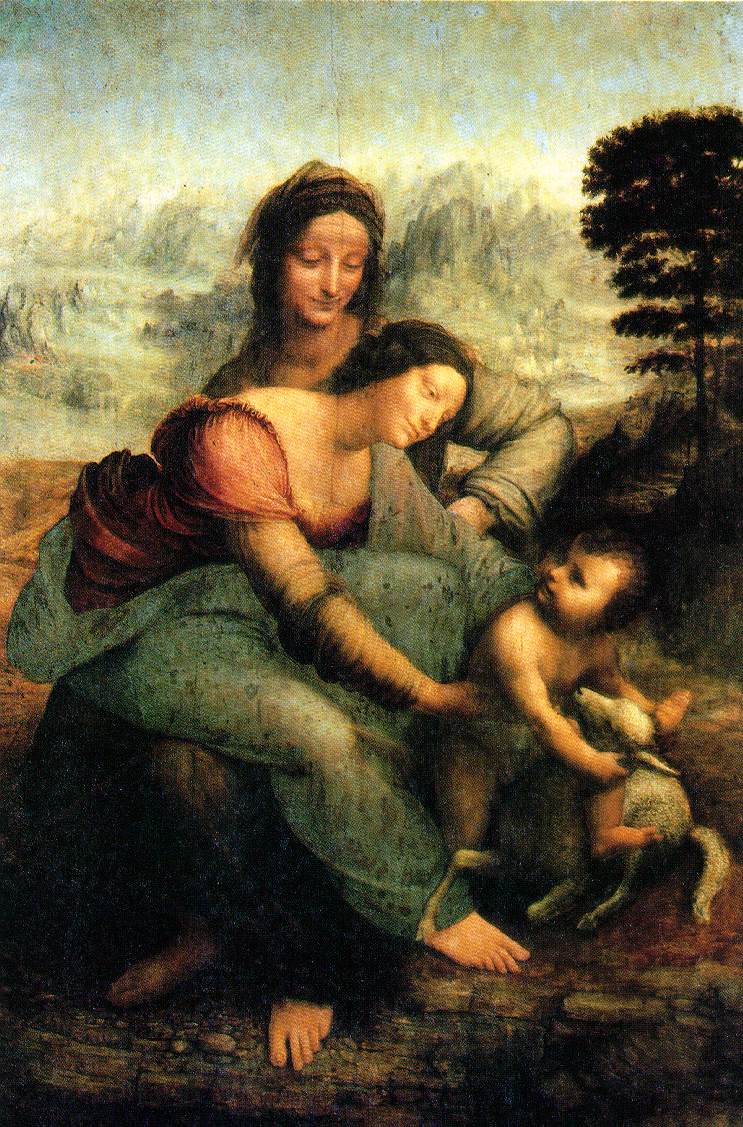
There, he worked on a commission for the Servite monastery, which was probably Virgin and Child with St. Anne (c.1502-1516). In 1502, he was employed
by General Cesare Borgia as an architect and military engineer, with whom he traveled, mainly through Central Italy, studying terrain and preparing maps for Borgia's future military campaigns.
It was also around that time that the Madonna of the Yarnwinder (1501) was created.

Leonardo da Vinci - Story life - part 3


Another work of this period, The Annunciation(c.1472-1475) was attributed to Leonardo, but it is likely that the picture was not painted entirely by him.
However, it is generally accepted that the overall composition, the figure of the angel and the landscape are his work.
Other surviving works from this period include Madonna with the Carnation (c.1475), Madonna Benois (c.1475-1478), Portrait of Ginevra de'Benci (c.1478-1480).
Leonardo received a commission to paint an altar piece St. Hieronymus (c.1480-1482), which was never finished, and to create a large panel Adoration of the Magi (1481-1482) for the church in San Donato a Scopeto, which was not finished either.
Unfortunately, Leonardo's tendency to leave work unfinished was as characteristic
of him as his artistic genius.

Tuesday, December 8, 2009

Portrait of a Young Man - Leonardo da Vinci


Portrait of a Young Man
Leonardo da Vinci
c.1490.
Oil on wood.
Pinacoteca Ambrosiana, Milan

The Baptism of Christ


The Baptism of Christ
Leonardo da Vinci

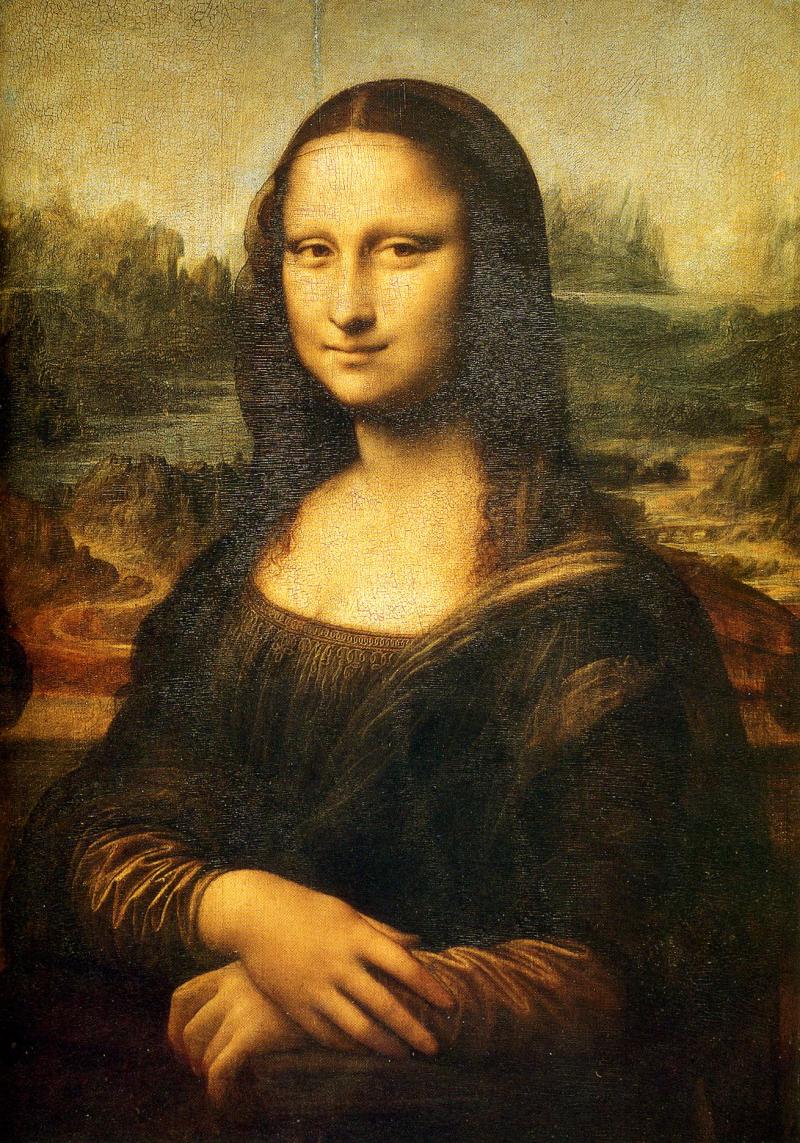
Mona Lisa


Portrait of Mona Lisa (1479-1528), also known as La Gioconda, the wife of Francesco del Giocondo; 1503-06 (150 Kb); Oil on wood, 77 x 53 cm (30 x 20 7/8 in); Musee du Louvre, Paris