Showing posts with label photos. Show all posts

Sunday, January 10, 2010

Juan Martín Cabezalero


Juan Martín Cabezalero (1633-1673) was a Spanish draftsman and painter.
Born in Almadén, he studied under Juan Carreño de Miranda, court painter to Charles II of Spain; Cabezalero lived at Carreño de Miranda's house until 1666.
Both he and Carreño were influenced by Van Dyck.
Few works by Cabezalero have survived.
His surviving works include his St Jerome (1666, Meadows Museum, Southern Methodist University, Dallas) and the Assumption of the Virgin (ca. 1670; Madrid, Prado).
The latter had been formerly attributed to Mateo Cerezo, also a pupil of Carreño de Miranda.
Antonio Palomino praises Cabezalero's modest, studious nature and laments that he died young.

Saturday, January 9, 2010

The Drinker - Dirk van Baburen


The Drinker Artist - Dirck van Baburen (ca. 1595-1624)
Museum - Musée Marmottan

Achilles - Dirk van Baburen


Dirck Van Baburen
Achilles- deciding to resume fighting upon the death of Patrocles

Thursday, January 7, 2010

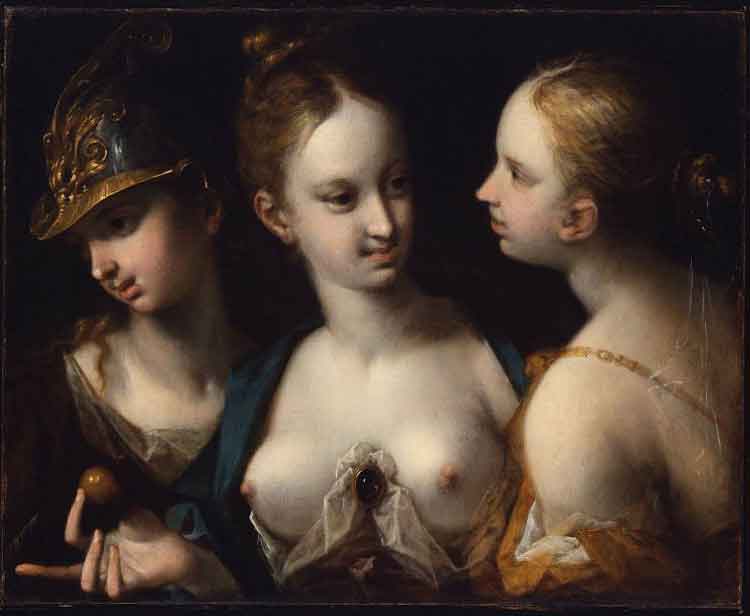
Hans Von Aachen - Pallas Athena, Venus and Juno


Hans Von Aachen
Pallas Athena, Venus and Juno
Museum of Fine Arts, Boston, USA

Hans Von Aachen - Allegory of Peace


Hans Von Aachen
Allegory of Peace, Art and Abundance

Hans Von Aachen - Joking Couple


Artist: Hans Von Aachen
Title: Joking Couple
Museum: Kunsthistorisches Museum, Vienna, Austria

Wednesday, January 6, 2010

Virgin of the Rocks - Leonardo da Vinci


Virgin of the Rocks
Leonardo da Vinci
1506-08- Oil on wood

National Gallery -
London

Leda and the Swan - Leonardo da Vinci


Leda and the Swan
Leonardo da Vinci

1505-10- Oil on wood

Earl of Pembroke,Wilton House,Salisbury, UK


John the Baptist - Leonardo da Vinci


St. John the Baptist, 1513-16
Leonardo da Vinci
69 x 57 cm (27 1/4 x 22 1/2 in.).
Musée du Louvre, Paris

Tobias and the Angel - Leonardo da Vinci


Tobias and the Angel- 1470-80
Leonardo da Vinci
National Gallery, London

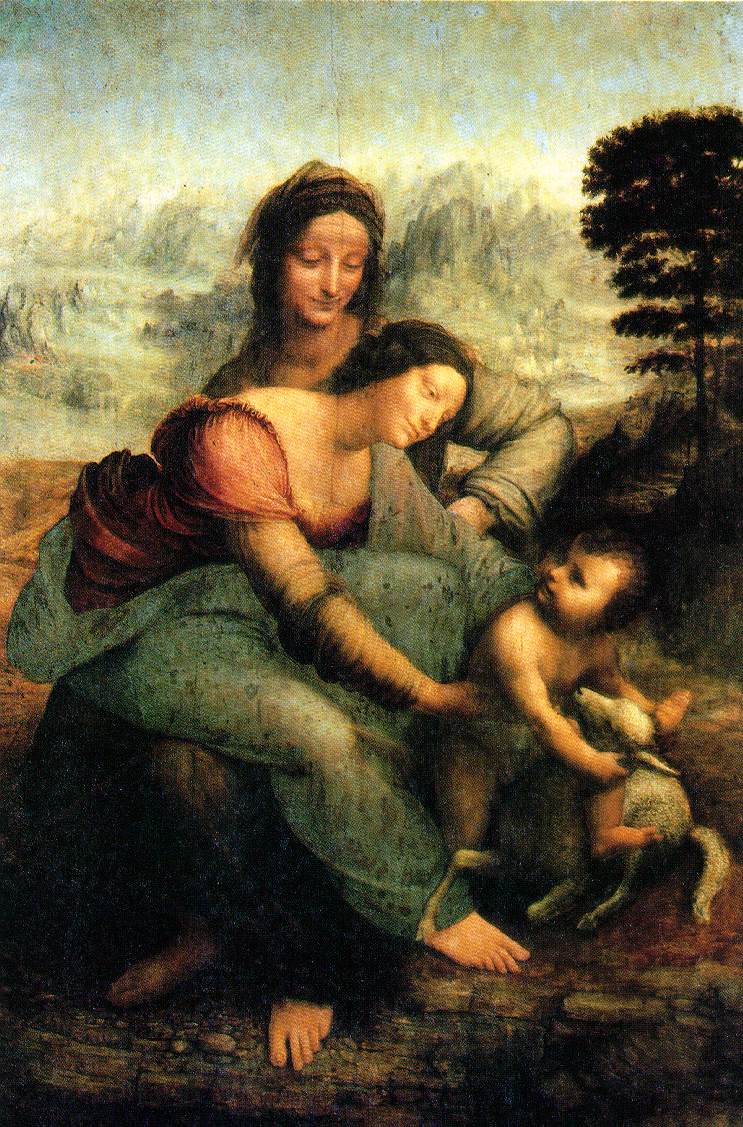
Virgin and Child with St. Anne - Leonardo da Vinci


Leonardo da Vinci -1502-1516
Virgin and Child with St. Anne
Oil on wood - Louvre

Madonna of the Yarnwinder - Leonardo da Vinci


Leonardo da Vinci
Madonna of the Yarnwinder.
Oil on wood-1501.

Portrait - Leonardo da Vinci


Portrait of an Unknown Woman
(La Belle Ferroniere)
Leonardo da Vinci - c.1490
Oil on wood. Louvre

Leonardo da Vinci - Story life - part 10


After the death of Charles d'Amboise in 1511, Leonardo accepted the protection of Giuliano de Medici, brother of the future Pope Leo X, with whom he then traveled to the papal court in Rome. Leonardo, by now 61 years old, apparently hoped to become a court painter there.
However, he never received any major commissions, comparable to those that the Pope had given to Raphael and Michelangelo.
Both these artists were working in Rome at the time
but Leonardo had little direct contact with them. During this time
he probably created St. John the Baptist (c.1513-1516), and there is one more John the Baptist (featuring many attributes of Bacchus, c. 1513-1516), which is also identified with Leonardo.

Leonardo da Vinci - Story life - part 8


In 1503, Leonardo came back to Florence.
He was commissioned by Francesco del Giocondo, a friend of Leonardo's father, to paint a portrait of the man's wife, Lisa Gherardini del Giocondo.
The result was the Mona Lisa (La Gioconda) (1503-1506), which
was to become one of the most famous pictures in the world, although
the portrait was not finished in time and never delivered to the client.
Leonardo received several more important commissions, including the
commission to decorate the Grand Council Chamber in the Palazzo Vecchio, the seat of government of Florence.
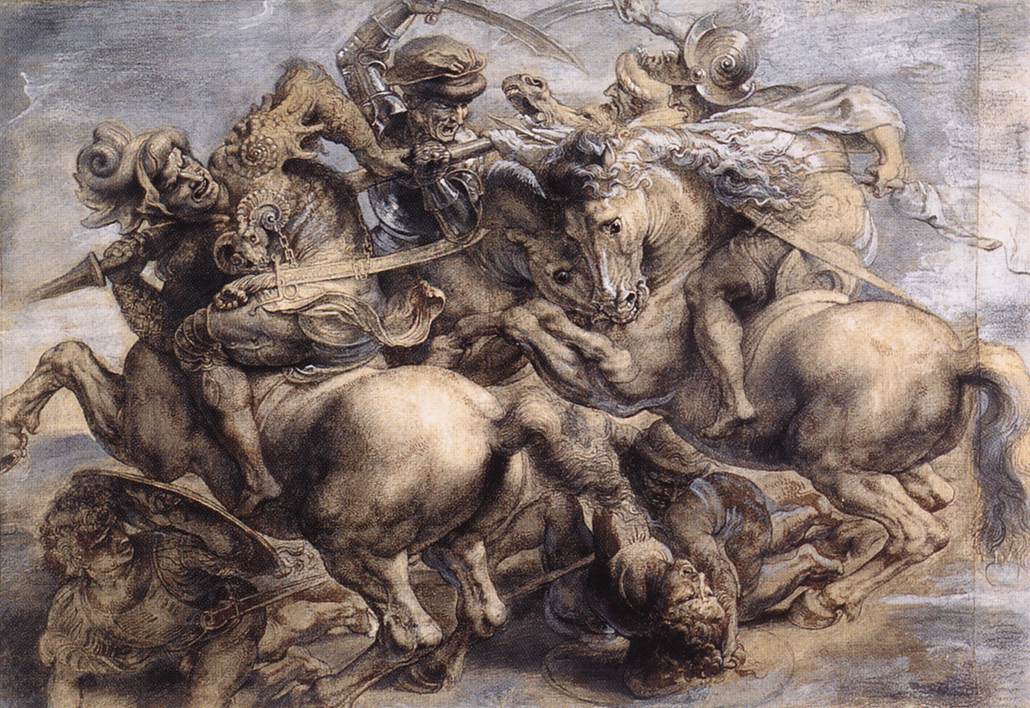
The wall-painting, which Leonardo left unfinished in the spring of 1506 and which
was destroyed
in the middle of the XVI century, depicted the Battle of Anghiari of 1440, when Florentine forces, together with their papal allies, defeated their Milanese opponents near
the town of Anghiari.
At the same time Michelangelo was commissioned to create a painting on the other wall of the same hall (the so-called Battle of Cascina), which was never finished either.

Leonardo da Vinci - Story life - part 7


In 1499, after the defeat of Ludovico Sforza by the French, Leonardo left Milan.
After briefly visiting Mantua, he moved on to Venice where he served as a military engineer.
In 1500, he returned to the city of his childhood, Florence.
There, he worked on a commission for the Servite monastery, which was probably Virgin and Child with St. Anne (c.1502-1516). In 1502, he was employed
by General Cesare Borgia as an architect and military engineer, with whom he traveled, mainly through Central Italy, studying terrain and preparing maps for Borgia's future military campaigns.
It was also around that time that the Madonna of the Yarnwinder (1501) was created.

Leonardo da Vinci - Story life - part 4


In 1482, Leonardo moved to Milan in the hope of obtaining the patronage of the ruler of the city, Ludovico Sforza, also known as Ludovico il Moro ("Ludovico the Moor" or "Ludovico the Dark") for his swarthy features.
Leonardo offered his services as a military engineer, sculptor and painter.
Ludovico accepted gladly, financing an independent workshop for the artist.
Leonardo would stay in Ludovico's service for 18 years.

Leonardo da Vinci - Story life - part 2


The first four years of his life were spent in a village near Vinci with his mother.
After 1457, he lived with his father's family, which soon moved to Florence.
Leonardo showed promise early on, with an innate talent in art and music
and excellent social skills. In 1467, at the age of 15, he became an apprentice to the Florentine painter and sculptor Andrea del Verrocchio, the foremost artist of his day.
Leonardo entered the San Luca guild of painters in Florence in 1472, indicating
that he had attained a degree of professional independence
but he remained with Andrea del Verrocchio until as late as 1480.
His first known work, which he painted as an assistant, is the angel kneeling on the left of Verrocchio's picture The Baptism of Christ (c.1472-1475). Verrocchio, it is said
was so impressed by the implications of his pupil's genius that he gave up painting.

Leonardo da Vinci - Story life - part 1


Leonardo da Vinci was the embodiment of the "Renaissance man", a man who had attained mastery over all branches of art and science.
He was a painter, sculptor, architect and engineer besides being a scholar in the natural sciences, medicine and philosophy.
Leonardo is probably most famous for painting the Mona Lisa, which is one of the world's best-known and most widely recognized works of art.
Leonardo da Vinci was born on the 15th of April, 1452, as the illegitimate son of the notary Ser Piero di Antonio da Vinci and a peasant woman named Caterina
in a small town called Vinci, near Empoli, Tuscany.
Although last names were already in use in Europe at the time, Leonardo never had one. His full name "Leonardo di ser Piero da Vinci" means "Leonardo son of Piero from Vinci."

Friday, December 11, 2009

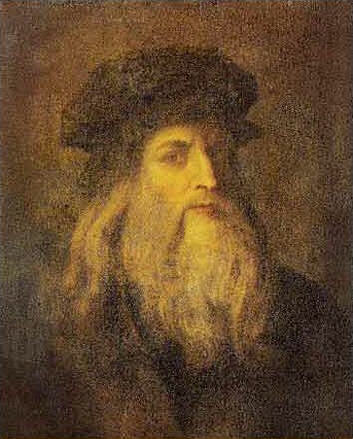
Leonardo da Vinci


Leonardo was an Italian polymath, scientist, mathematician, engineer, inventor, anatomist, painter, sculptor, architect, botanist, musician and writer.
Whew! Often described as the archetype of the renaissance man
Leonardo’s unquenchable curiosity was rivaled only by his powers of invention.