Showing posts with label France travel. Show all posts

Monday, January 25, 2010

RALPH EARL


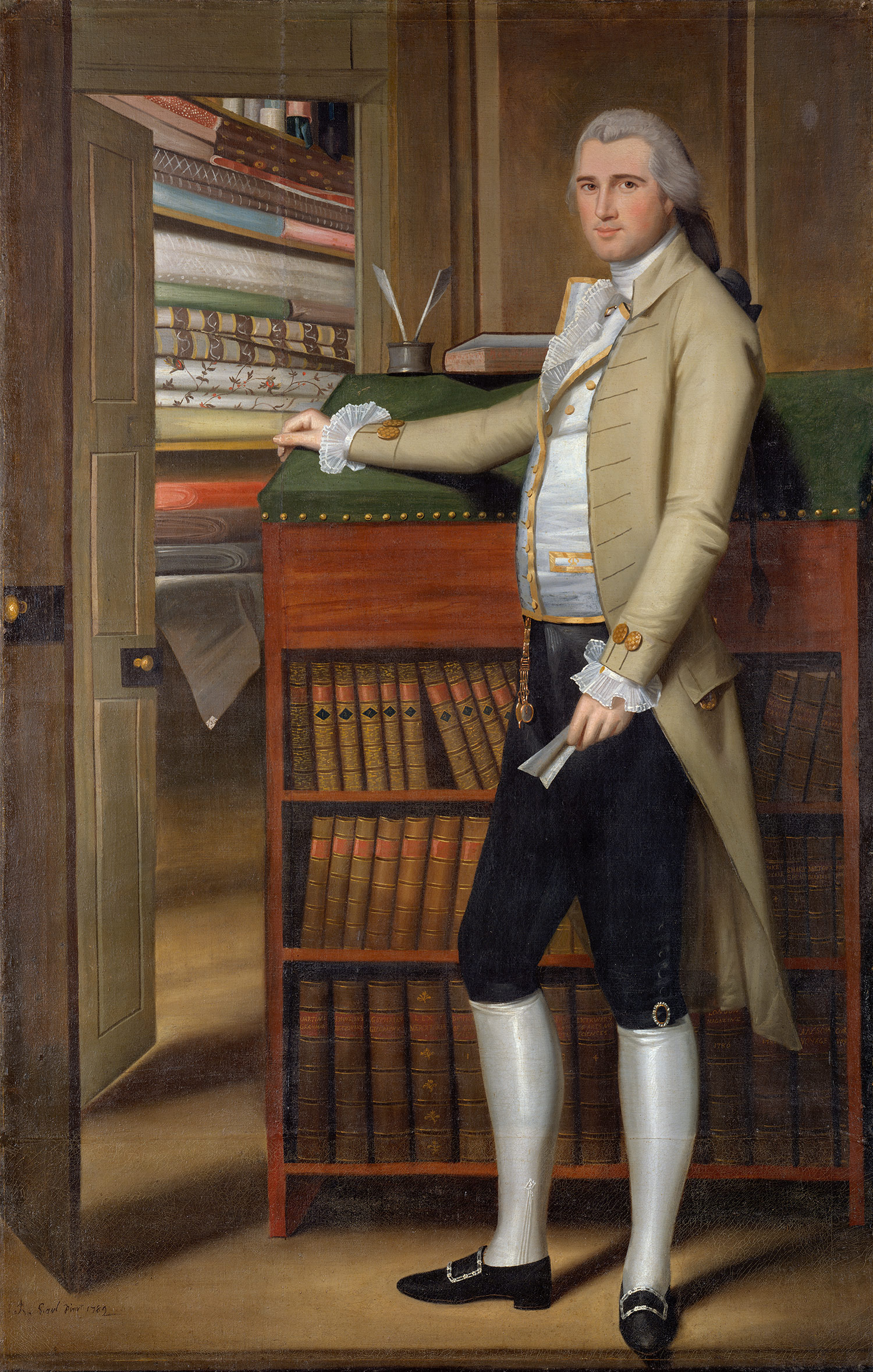
Ralph Earl ( 1751 – 1801) was an American painter known for his portraits
of which at least 183 can be documented.
He also painted six landscapes, including a panorama display of Niagara Falls.
Ralph Earl was born in either Shrewsbury or Leicester, Massachusetts.
By 1774, he was working in New Haven, Connecticut as a portrait painter.
In the autumn of 1774, Earl returned to Leicester, Massachusetts
to marry his cousin, Sarah Gates.
A few months later, their daughter was born; however, Earl left them both with Sarah's parents and returned to New Haven.
Like so many of the colonial craftsmen, Earl was self-taught
and for many years was an itinerant painter. In 1775, Earl visited Lexington and Concord, which were the sites of recent battles in the American Revolution.
Although his father was a colonel in the Revolutionary army, Ralph Earl himself was a Loyalist.
Nevertheless, working in collaboration with the engraver Amos Doolittle, he drew four battle scenes that were made into pro-Revolutionary propaganda prints.
In 1778, he left behind his wife and daughter and escaped to
England by disguising himself as the servant of British army captain John Money.
In London, he entered the studio of Benjamin West, and painted
the king and many notables. Earl continued painting portraits in the town of Norwich.
He later married Ann Whiteside, an English woman, despite the
fact that he had never ended his marriage with Sarah Gates.
In 1785 or 1786, Earl returned to the United States with his new wife.
After his return to America, he made portraits
of Timothy Dwight, Governor Caleb Strong, Roger Sherman, and other prominent men.
He also painted a large picture of Niagara Falls. In September 1786, while living in New York City, Earl was imprisoned for failing to pay his personal debts.
Even while in jail, he drew portraits of his visitors, friends, and family of the Society for the Relief of Distressed Debtors. He was released in January 1788.
He died in Bolton, Connecticut, on the August 16, 1801.
Alcoholism is believed to be the main cause of death.

Friday, January 22, 2010

Christ on the Cross with the Virgin, John and Mary Magdalen


Christ on the Cross with the Virgin, John
and Mary Magdalen

Bernardo Daddi
1343
Galleria dell'Accademia, Florence, Italy

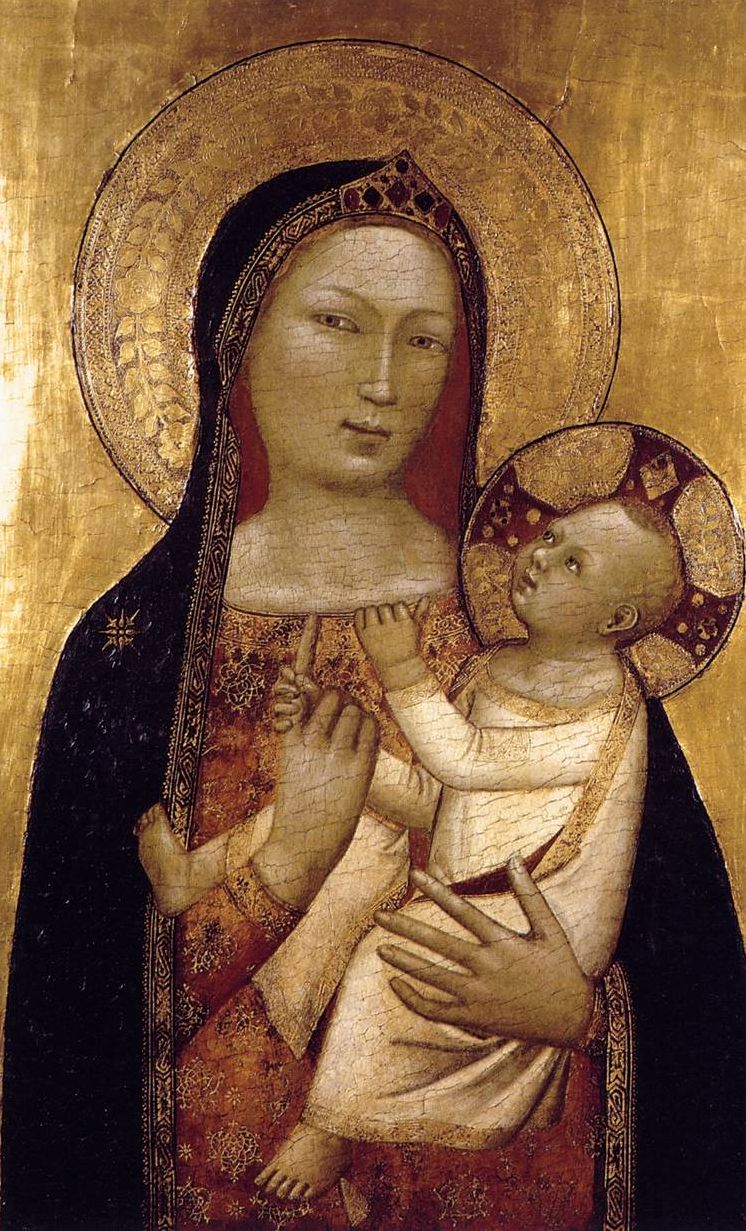
Virgin and Child - Bernardo Daddi


Virgin and Child - Bernardo Daddi
1340-45 Tempera on panel, 84 x 55 cm
Museo Thyssen-Bornemisza, Madrid

Thursday, January 7, 2010

Wednesday, December 2, 2009

Apollo in the louvre museum


In Greek and Roman mythology, Apollo is one of the most important of all the deities.
Apollo has been variously recognized as a god of light and the
sun; truth and prophecy; archery; medicine and healing; music, poetry, and the arts; and
more.
Apollo is the son of Zeus and Leto, and has a twin sister, the chaste huntress Artemis.

Monday, November 30, 2009

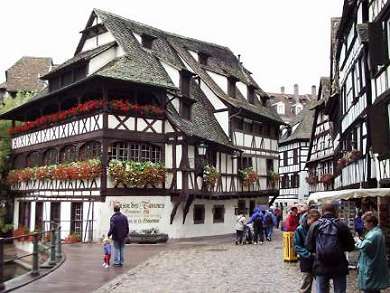
strasbourg - france


Strasbourg is the capital and principal city of the Alsace region in north-eastern France.
Located close to the border with Germany, it is the capital of the Bas-Rhin department.
Strasbourg is the seat of several European institutions such as the Council of Europe and the Eurocorps as well as the European Parliament and the European Ombudsman of the European Union. Strasbourg is an important centre of manufacturing and engineering, as well as of road, rail, and river communications.
The port of Strasbourg is the second largest on the Rhine after Duisburg, Germany.
The city is the seat of the Central Commission for Navigation on the Rhine.
Strasbourg's historic city centre, the Grande Île, was classified
a World Heritage site by UNESCO

Sunday, November 29, 2009

Paris History - part 6


- 1940: Nazi Germany invades Paris and marches on the Champs-Elysées.
A four-year occupation begins. General Charles de Gaulle flees to London and leads a resistance movement from abroad, sending messages to resistants over British radio.
- 1942: The collaborationist Paris government helps organize the massive deportation of French Jews to Nazi concentration camps
first assembling them at the Velodrome d'Hiver near the Eiffel Tower.
- 1944: Paris is liberated by Allied forces.
The city narrowly escapes destruction by the Nazis when
an officer refuses to obey Hitler's orders.

Paris History - part 4


- 1643: At age 5, Louis XIV, also known as the Sun King, becomes king of France. His reign introduces a period of major prosperity-- not to mention decadence. The King builds Versailles in 1623, displacing the center of power from the Palais Royal in central Paris to the countryside.

- 1774: Louis XVI ascends to the throne.
Known for his political and social ineptitude and his curious fixation with locks and clocks
he is married to Marie Antoinette, the adolescent daughter of powerful Austrian empress Maria Theresa.
- July 14, 1789: The Bastille prison in Paris is stormed and burned to rubble, marking the beginning of the French Revolution.
Louis XVI and Marie Antoinette are widely accused of rampant
decadence and indifference to the plight of the people.
- 1792: Fall of the monarchy and declaration of the first French republic.
In 1793, Louis XVI and Marie Antoinette are guillotined.
- 1793-1799: The Revolutionary "reign of terror" leads to thousands of executions and general chaos, and Paris is the center of it.
Religion is banned and a new calendar is established.

Paris History - part 3


- includes the Louvre begins, surrounding the medieval city.
- Late 14th century: Nearly half of Paris' population is annihilated
by plague, also known as the Black Death.
- 1449: Joan of Arc and French troops defeat the English
at Orléans, ending nearly a decade of Norman English control over France.
The English are eventually driven from France in 1453.
- Late 15th century: The Renaissance (literally, "rebirth") begins in Paris, turning the city into a flourishing center of art, science, and architecture.
Technological advances lead to the city's sprawl.
- Late 16th century: Bloody religious conflicts between Protestants
and Catholics lead to the St. Bartholomew's Day massacre.
Over 3000 Protestant Huguenots perish in the massacre.

Versailles - franch


Versailles is the palace of the versalmonator, means a power house or a chateau.
In the older days, Versailles was a small village, it is only now that
it is a sub urban part of Paris which is the capital of France.
Versailles in late 17th century
was considered the strongest political power house where the monarch used to sit
when the royal family was enforced to come back to Paris.
The political side to the building has made it so famous that tourists like to pay their visit to this building.
The building covers a total area of 110,000 square meters with 700 rooms in it with 67 staircases and more that 200 windows.
The Versailles for sure is a grand place worth visiting.
The building has lots of paintings, handmade sculptures, drawings, objects and furniture.
It was during the year 1038, when for the first time, the name Versailles was coined. During this period, the villagers of this village was on a small castle and there was a church which was governed by the local landlords of the village.
Versailles was built by the French men and it was also called the unofficial capital of France.
It is only ten kilometers away from Paris.
The way in which the streets of Washington DC are made have been based upon Versailles’ model of streets. The city welcomes its visitors with open arms
and provides one of the best luxurious hotels, food & site seeing facility to them.
Whenever visitors plan to visit this part of the city, they make
it a long holiday so that they can spend quality time in the Versailles.

Saturday, November 28, 2009

Cheverny Castle - france


Only some remnants of Raoul Hurault’s old fortified castle possibly remain today.
To say possibly may be surprising.
This is a mystery in Cheverny as it cannot be proven whether part of the outbuildings are vestiges of the old castle.
The old castle was captured in a drawing by a travelling artist but there
are no reliable landmarks in the drawing.
This is why the present castle could well have been built
on the exact spot as the old castle, which would have been completely demolished.
The present Château de Cheverny is an original jewel among the more famous monuments that stretch along the Loire Valley. In fact, Renaissance style did not find its place in Cheverny
which is built in the purest Louis XIII classical style, distinguished by an extraordinarily symmetrical architecture. Cheverny, which was built in the first part of the 17th Century, is a prime example of this style.
Its delicate features also stand out through the perfect whiteness of the stones, from the Bourré quarries in the Cher Valley.
This particular stone not only comes out white, but also becomes harder with time.
However, this almost rigid architectural layout also has its contrasts, such as the variety of roofing styles, from domes, to bell-towers and other French-style roofs.
The building work was put under the direction of an architect, master-mason and sculptor, Jacques Bougier, who was very well-known in his time.
He also worked on a wing of the nearby Château de Blois.
His work on a royal castle shows Cheverny’s desire for quality.
Unfortunately, Bougier died before completing his work. Cheverny’s main staircase is the work of an unknown craftsman who simply left his initials and a date on the ground floor: FL 1634. The Château de Cheverny is perfectly preserved as it was built all at once.
Nothing has been changed.
Thanks to this, Cheverny has maintained the same exterior for the last 350 years, without gaining the smallest wrinkle!

Friday, November 27, 2009

Eiffel Tower - At Night


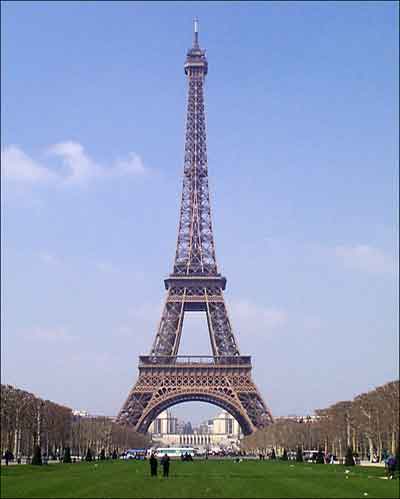
The Eiffel Tower is an iron tower built on the Champ de Mars beside the River Seine in Paris.
It is the tallest structure in Paris and among the most recognized symbols in the world.
Named after its designer, engineer Gustave Eiffel, it is a premier tourist destination.

Eiffel Tower


Architect : Gustave Eiffel
Location: Paris, France map
Date :1887 to 1889 timeline
Building Type: exposition observation tower
Construction System : exposed iron
Climate: temperate
Context :urban exposition
Style :Victorian Structural Expressionist
- A symbol of Paris worldwide. 985' high rugged tracery of iron work.
Commission from competition victory.