Showing posts with label France Europe. Show all posts

Monday, January 25, 2010

RALPH EARL


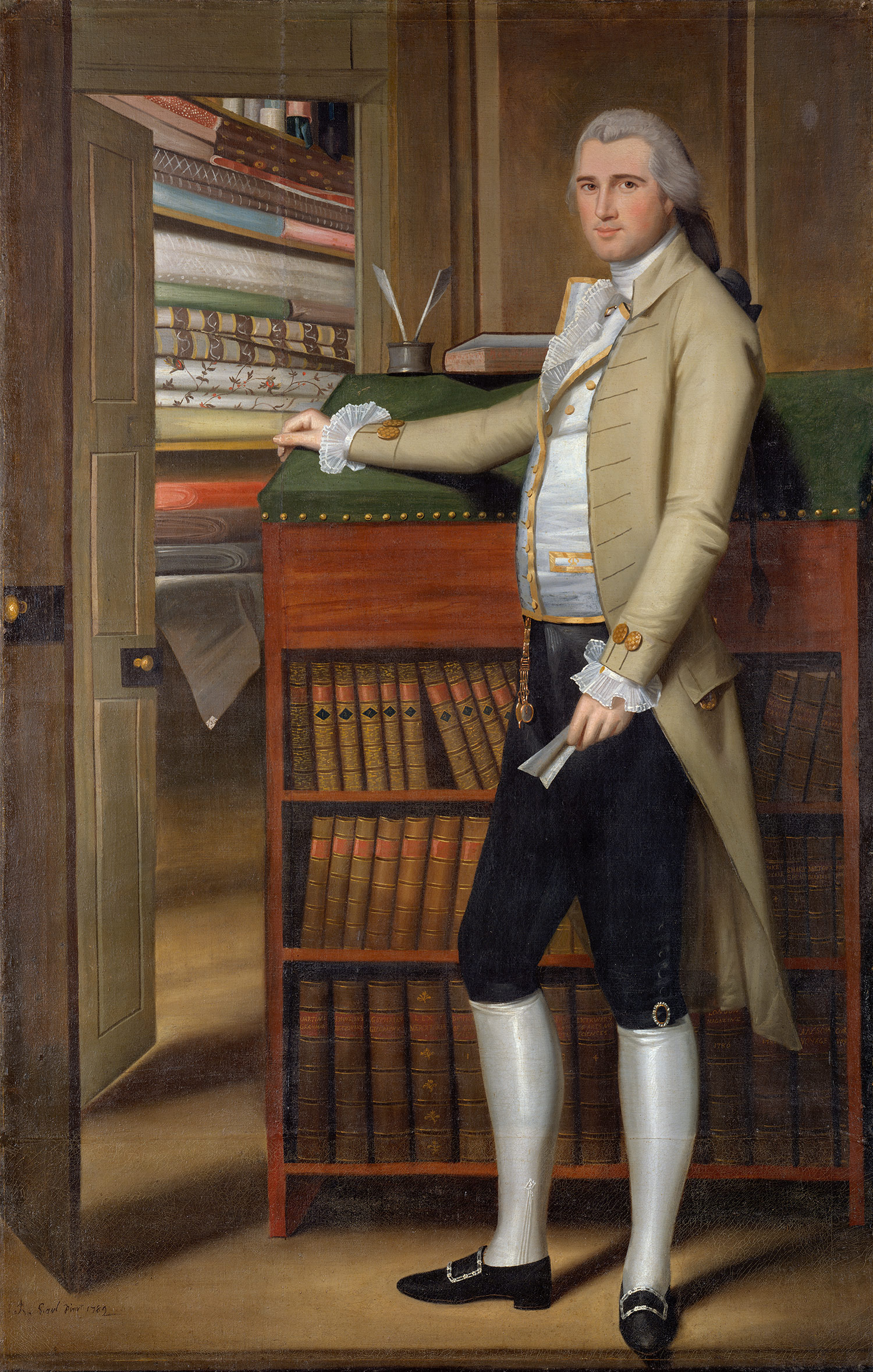
Ralph Earl ( 1751 – 1801) was an American painter known for his portraits
of which at least 183 can be documented.
He also painted six landscapes, including a panorama display of Niagara Falls.
Ralph Earl was born in either Shrewsbury or Leicester, Massachusetts.
By 1774, he was working in New Haven, Connecticut as a portrait painter.
In the autumn of 1774, Earl returned to Leicester, Massachusetts
to marry his cousin, Sarah Gates.
A few months later, their daughter was born; however, Earl left them both with Sarah's parents and returned to New Haven.
Like so many of the colonial craftsmen, Earl was self-taught
and for many years was an itinerant painter. In 1775, Earl visited Lexington and Concord, which were the sites of recent battles in the American Revolution.
Although his father was a colonel in the Revolutionary army, Ralph Earl himself was a Loyalist.
Nevertheless, working in collaboration with the engraver Amos Doolittle, he drew four battle scenes that were made into pro-Revolutionary propaganda prints.
In 1778, he left behind his wife and daughter and escaped to
England by disguising himself as the servant of British army captain John Money.
In London, he entered the studio of Benjamin West, and painted
the king and many notables. Earl continued painting portraits in the town of Norwich.
He later married Ann Whiteside, an English woman, despite the
fact that he had never ended his marriage with Sarah Gates.
In 1785 or 1786, Earl returned to the United States with his new wife.
After his return to America, he made portraits
of Timothy Dwight, Governor Caleb Strong, Roger Sherman, and other prominent men.
He also painted a large picture of Niagara Falls. In September 1786, while living in New York City, Earl was imprisoned for failing to pay his personal debts.
Even while in jail, he drew portraits of his visitors, friends, and family of the Society for the Relief of Distressed Debtors. He was released in January 1788.
He died in Bolton, Connecticut, on the August 16, 1801.
Alcoholism is believed to be the main cause of death.

Wednesday, January 6, 2010

Leonardo da Vinci - Story life - part 2


The first four years of his life were spent in a village near Vinci with his mother.
After 1457, he lived with his father's family, which soon moved to Florence.
Leonardo showed promise early on, with an innate talent in art and music
and excellent social skills. In 1467, at the age of 15, he became an apprentice to the Florentine painter and sculptor Andrea del Verrocchio, the foremost artist of his day.
Leonardo entered the San Luca guild of painters in Florence in 1472, indicating
that he had attained a degree of professional independence
but he remained with Andrea del Verrocchio until as late as 1480.
His first known work, which he painted as an assistant, is the angel kneeling on the left of Verrocchio's picture The Baptism of Christ (c.1472-1475). Verrocchio, it is said
was so impressed by the implications of his pupil's genius that he gave up painting.

Wednesday, December 2, 2009

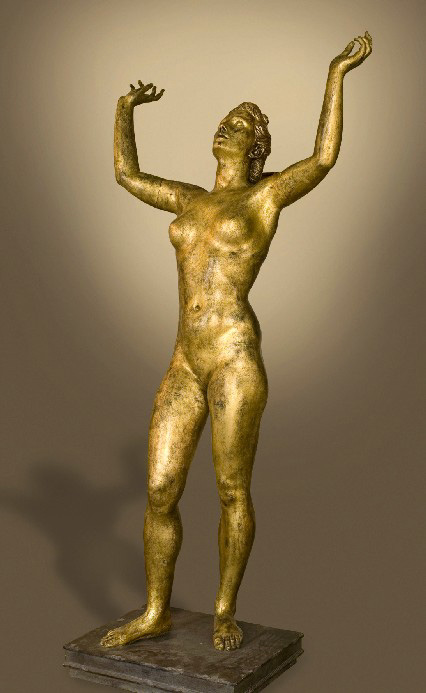
Apollo in the louvre museum


In Greek and Roman mythology, Apollo is one of the most important of all the deities.
Apollo has been variously recognized as a god of light and the
sun; truth and prophecy; archery; medicine and healing; music, poetry, and the arts; and
more.
Apollo is the son of Zeus and Leto, and has a twin sister, the chaste huntress Artemis.

Monday, November 30, 2009

Ideas help you in the Louvre Museum


The Musée du Louvre in Paris is perhaps the most famous museum in the world.
1. Getting into the building
The long queues at the Pyramid entrance in the centre
of the Louvre are almost as famous as the museum itself.
Getting in line for an entrance ticket at the Pyramid can sometimes take as long as an hour.
That’s hardly surprising when 15,000 people a day visit the building.
But did you know that there are four other entrances?
If you want to avoid the queues then try using the entrance
at the Porte des Lions just east of the Pont Royal; at number 99 the Rue du Rivoli; at the Arc du Carousel or directly from the Metro station Palais Royal-Musée du Louvre (platform on line 1).
You can escape the queues completely by purchasing your ticket in advance at FNAC or other department stores.
There’s usually a small fee of a couple of euros per ticket for this service.
2. Good value tickets
Entrance to the Louvre is €9. If you head there after 6pm on a Wednesday or Friday, entrance is reduced to just €6 and the museum is open until 9.45pm.
Entrance is free for under 26s on Friday evenings.
On Bastille Day (14 July) and the first Sunday of each month entrance
is free for everyone, all day.
Be warned though, the galleries get even more busy at these times.
3. Get the view of an expert
The Louvre is massive. There are 35,000 works of art and 380,000 museum objects to see.
It’s so huge that it would take you a whole
day just to walk through all the galleries, never mind seeing any of the art.

In fact, a good way to get an overview of this enormous museum is to take one of the excellent guided tours, which depart from under the Pyramide throughout the day.
Tours are available in a variety of languages and are aimed at different levels, from first-time visitors to art experts. Tour times vary daily
so check the board when you arrive to see what’s on offer that day.
4. Check in advance
Of course, no trip to the Louvre is complete without seeing the Mona Lisa and the Venus de Milo. The Louvre have a habit of moving these
masterpieces around the building at short notice, so if you want to avoid wandering endless galleries needlessly
then take a quick look at their website before you visit www.louvre.fr.
5. Stop and recharge
With so many galleries, you’ll be in need of refreshment.
There are good places to eat and drink in the Louvre, but be warned that the Café Denon and Café Richlieu are rather expensive. Better value can be had at the Café Mollien (on the first floor) which also has a summer terrace.
But if you want to escape the building
you can get good snacks and light lunches in the
many cafés in the beautiful Jardins des Tuileries.
Also look out for the mobile snack stands which serve good
quality coffee at half the price of the museum cafés.

Louvre Museum


The national museum of France is Louvre and is situated in Paris.
It is one of the most historic pieces of art that has been restored by the French.
There is a very common saying for the French that they consider
themselves the best in the world. One can only be less or equal
but never better than them.
The museum is spread in a total area of 652,300 square feet and has more than thirty five thousand objects placed in it.
It is almost impossible to see the entire museum in a couple of hours and do justice to every piece of art that is placed from the 6th century BC till the 19th century AD.
This museum was actually built as the fort for Philip II and some remains of the fort are still present, not exactly in its best shape.
A lot of changes in terms of its structure have been made to give it the present look and finally it was decided to keep the royal collection in the museum.
The museum was inaugurated in 1739.
However, due to some infrastructural problems, it was shut down for almost a period of 5 years. Some of the most famous pieces
of art that is displayed is the Antonio Canova’s Psyche, the Venus de Milo, the Mona Lisa painting, some handprints and drawings, Egypt, Greek, and roman antiques, along with handmade cultures and beautiful glass paintings.
The museum thus has a very rich heritage that has made the French proud of it.

Versailles city


Versailles a city renowned for its château, the Palace of Versailles
was the de facto capital of the kingdom of France for over a century, from 1682 to 1789.

Toulouse - france


Toulouse is a city in southwest France on the banks of the River Garonne, 590 km away from Paris and half-way
between the Atlantic Ocean and the Mediterranean Sea.
the Toulouse metropolitan area is the fifth-largest in France.
Toulouse is the home base of the European aerospace industry
Toulouse was the capital of the former province of Languedoc
It is now the main city of the Midi-Pyrénées region, the largest region
in metropolitan France.
It is also the main city of the Haute-Garonne

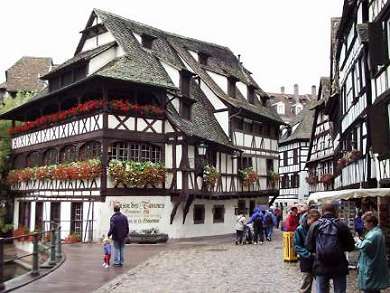
strasbourg - france


Strasbourg is the capital and principal city of the Alsace region in north-eastern France.
Located close to the border with Germany, it is the capital of the Bas-Rhin department.
Strasbourg is the seat of several European institutions such as the Council of Europe and the Eurocorps as well as the European Parliament and the European Ombudsman of the European Union. Strasbourg is an important centre of manufacturing and engineering, as well as of road, rail, and river communications.
The port of Strasbourg is the second largest on the Rhine after Duisburg, Germany.
The city is the seat of the Central Commission for Navigation on the Rhine.
Strasbourg's historic city centre, the Grande Île, was classified
a World Heritage site by UNESCO

Sunday, November 29, 2009

Paris History - part 6


- 1940: Nazi Germany invades Paris and marches on the Champs-Elysées.
A four-year occupation begins. General Charles de Gaulle flees to London and leads a resistance movement from abroad, sending messages to resistants over British radio.
- 1942: The collaborationist Paris government helps organize the massive deportation of French Jews to Nazi concentration camps
first assembling them at the Velodrome d'Hiver near the Eiffel Tower.
- 1944: Paris is liberated by Allied forces.
The city narrowly escapes destruction by the Nazis when
an officer refuses to obey Hitler's orders.

Paris History - part 5


- 1799: A revolutionary general named Napoleon Bonaparte stabilizes the unruly government.
He becomes Emperor in 1804.
His emperorship puts a hiatus on France's struggle toward a Republic-- this is well-symbolized by Napoleon's moving into the former royal seat of power at Versailles.
The Emperor's taste for power and conquest lead to the colonization of large swathes of North Africa. He is defeated at Waterloo in 1815.
-Mid-19th century: The Paris that still largely remains today is constructed by Baron Haussmann, under the direction of Napoleon III.
Wide boulevards and a sewer system replace most of the narrow, cramped medieval and Renaissance-era streets of the city.
-1870: Following a disastrous war with the Prussians, the third Republic
is declared, marking the beginning of democratic institutions in France.
The Belle Epoque opens, another artistically and culturally fertile time in Paris history. Art nouveau architecture and artistic movements like impressionism take the world by storm.
-1920's and 1930's: Paris is one of the world's most important hotbeds of experimentation in art and literature. Salvador Dali, Pablo Picasso
and the "Lost Generation" of English-speaking writers like Ernest Hemingway, James Joyce, James Baldwin, Gertrude Stein, and Ezra Pound make Paris their home.

Paris History - part 4


- 1643: At age 5, Louis XIV, also known as the Sun King, becomes king of France. His reign introduces a period of major prosperity-- not to mention decadence. The King builds Versailles in 1623, displacing the center of power from the Palais Royal in central Paris to the countryside.

- 1774: Louis XVI ascends to the throne.
Known for his political and social ineptitude and his curious fixation with locks and clocks
he is married to Marie Antoinette, the adolescent daughter of powerful Austrian empress Maria Theresa.
- July 14, 1789: The Bastille prison in Paris is stormed and burned to rubble, marking the beginning of the French Revolution.
Louis XVI and Marie Antoinette are widely accused of rampant
decadence and indifference to the plight of the people.
- 1792: Fall of the monarchy and declaration of the first French republic.
In 1793, Louis XVI and Marie Antoinette are guillotined.
- 1793-1799: The Revolutionary "reign of terror" leads to thousands of executions and general chaos, and Paris is the center of it.
Religion is banned and a new calendar is established.

Paris History - part 3


- includes the Louvre begins, surrounding the medieval city.
- Late 14th century: Nearly half of Paris' population is annihilated
by plague, also known as the Black Death.
- 1449: Joan of Arc and French troops defeat the English
at Orléans, ending nearly a decade of Norman English control over France.
The English are eventually driven from France in 1453.
- Late 15th century: The Renaissance (literally, "rebirth") begins in Paris, turning the city into a flourishing center of art, science, and architecture.
Technological advances lead to the city's sprawl.
- Late 16th century: Bloody religious conflicts between Protestants
and Catholics lead to the St. Bartholomew's Day massacre.
Over 3000 Protestant Huguenots perish in the massacre.

Paris History - part 1


Paris has been a thriving metropolis and a center
of intellectual and artistic achievement for centuries.
The city's roots reach to the 3rd century B.C., and influences as diverse as Celtic, Roman, Scandinavian, and English are woven into the city's rich heritage.
Key Dates in Paris History
- 3rd century B.C.: The area around L'Ile de la Cité is settled by a tribe of Celtic fishermen, the Parisii. The settlement is named Lutetia.
- 52 B.C.: The Roman Empire under Julius Caesar seizes the city
which becomes part of the Roman territory known as Gaul.

Nice city - franch


Nice is a city in southern France located on the Mediterranean coast, between Marseille, France, and Genoa, Italy, with 347 060 inhabitants in the 2006 estimate.
The city is a major tourist centre and a leading resort on the French Riviera
It is the historical capital city of the County of Nice .

Saturday, November 28, 2009

Cheverny Castle - france


Only some remnants of Raoul Hurault’s old fortified castle possibly remain today.
To say possibly may be surprising.
This is a mystery in Cheverny as it cannot be proven whether part of the outbuildings are vestiges of the old castle.
The old castle was captured in a drawing by a travelling artist but there
are no reliable landmarks in the drawing.
This is why the present castle could well have been built
on the exact spot as the old castle, which would have been completely demolished.
The present Château de Cheverny is an original jewel among the more famous monuments that stretch along the Loire Valley. In fact, Renaissance style did not find its place in Cheverny
which is built in the purest Louis XIII classical style, distinguished by an extraordinarily symmetrical architecture. Cheverny, which was built in the first part of the 17th Century, is a prime example of this style.
Its delicate features also stand out through the perfect whiteness of the stones, from the Bourré quarries in the Cher Valley.
This particular stone not only comes out white, but also becomes harder with time.
However, this almost rigid architectural layout also has its contrasts, such as the variety of roofing styles, from domes, to bell-towers and other French-style roofs.
The building work was put under the direction of an architect, master-mason and sculptor, Jacques Bougier, who was very well-known in his time.
He also worked on a wing of the nearby Château de Blois.
His work on a royal castle shows Cheverny’s desire for quality.
Unfortunately, Bougier died before completing his work. Cheverny’s main staircase is the work of an unknown craftsman who simply left his initials and a date on the ground floor: FL 1634. The Château de Cheverny is perfectly preserved as it was built all at once.
Nothing has been changed.
Thanks to this, Cheverny has maintained the same exterior for the last 350 years, without gaining the smallest wrinkle!

Friday, November 27, 2009

Eiffel Tower - At Night


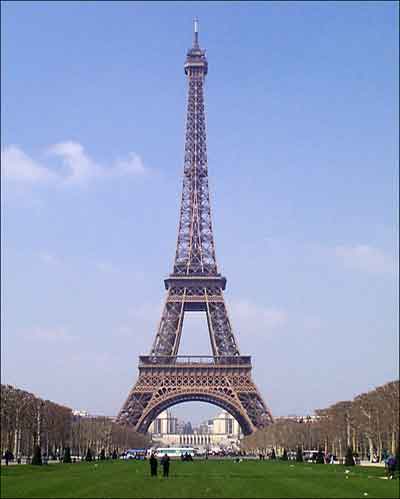
The Eiffel Tower is an iron tower built on the Champ de Mars beside the River Seine in Paris.
It is the tallest structure in Paris and among the most recognized symbols in the world.
Named after its designer, engineer Gustave Eiffel, it is a premier tourist destination.

Eiffel Tower


Architect : Gustave Eiffel
Location: Paris, France map
Date :1887 to 1889 timeline
Building Type: exposition observation tower
Construction System : exposed iron
Climate: temperate
Context :urban exposition
Style :Victorian Structural Expressionist
- A symbol of Paris worldwide. 985' high rugged tracery of iron work.
Commission from competition victory.