Showing posts with label Greater Flamingo. Show all posts

Thursday, January 7, 2010

Hans Von Aachen - Allegory of the Turkish Wars


Hans Von Aachen Allegory of the Turkish Wars
The Declaration of War at Constantinople - 1603-04

Monday, November 30, 2009

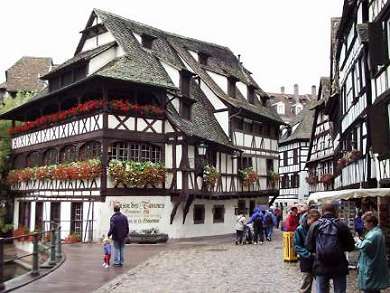
strasbourg - france


Strasbourg is the capital and principal city of the Alsace region in north-eastern France.
Located close to the border with Germany, it is the capital of the Bas-Rhin department.
Strasbourg is the seat of several European institutions such as the Council of Europe and the Eurocorps as well as the European Parliament and the European Ombudsman of the European Union. Strasbourg is an important centre of manufacturing and engineering, as well as of road, rail, and river communications.
The port of Strasbourg is the second largest on the Rhine after Duisburg, Germany.
The city is the seat of the Central Commission for Navigation on the Rhine.
Strasbourg's historic city centre, the Grande Île, was classified
a World Heritage site by UNESCO

Friday, November 27, 2009

Eiffel Tower


Architect : Gustave Eiffel
Location: Paris, France map
Date :1887 to 1889 timeline
Building Type: exposition observation tower
Construction System : exposed iron
Climate: temperate
Context :urban exposition
Style :Victorian Structural Expressionist
- A symbol of Paris worldwide. 985' high rugged tracery of iron work.
Commission from competition victory.

Saturday, November 21, 2009

Laggar Falcon


The Laggar Falcon (Falco jugger) is a mid-sized bird of prey which occurs
in the Indian subcontinent from
extreme south-east Iran, south-east Afghanistan, Pakistan, through India, Nepal, Bhutan, Bangladesh and north-west Myanmar.
It resembles the Lanner Falcon but is darker overall, and has blackish "trousers"
(tibiotarsus feathers).
Fledglings have an almost entirely dark underside
and first-year subadult birds still retain much dark on the belly.
This species belongs to a close-knit complex of falcons known as hierofalcons.
In this group, there is ample evidence for rampant hybridization and incomplete lineage sorting which confounds analyses of DNA sequence
data to a massive extent; molecular studies with small sample sizes can simply not be expected to yield reliable conclusions in the entire hierofalcon group.
The radiation of the entire living diversity of hierofalcons seems to have
taken place in the Eemian interglacial at the start of the Late Pleistocene, a mere 130,000-115,000 years ago; the Laggar Falcon represents a lineage
that arrived at its present range out of eastern Africa by way of the Arabian Peninsula which during that time had a more humid climate than today.
Laggar Falcons used to be the most common falcons in the region, but numbers have declined markedly in recent times and today it is probably nowhere
a common species anymore.
The main threats are the intensification of pesticide
use in the region and use as a decoy to trap large falcons.

Friday, November 6, 2009

Falco berigora


The Brown Falcon, Falco berigora, is a member of the Brown Falcons
are small to medium-sized raptors
. The female is larger than the male.
The Brown Falcon has a range of plumage colours, from
very dark brown to light brown above and off-white below. Generally, the upperparts are dark brown and the underparts are pale buff or cream.
The sides of the head are brown with a characteristic tear-stripe below the eye.
Birds from the tropical north are very dark, with a paler face and undertail, while those from central Australia are paler all over.
Younger birds resemble dark adults, but have less obvious
barring on the tail, and a buff-yellow colour on the face
throat and nape of the neck.

Monday, November 2, 2009

Falco chicquera


The Red-necked Falcon or Red-headed Merlin (Falco chicquera) is a bird of prey in the falcon family.
This bird is a widespread resident in India and
adjacent regions as well as sub-Saharan Africa. It is sometimes called Turumti locally.
The Red-necked Falcon is a medium-sized, long-winged species with a bright rufous crown and nape. It is on average 30–36 cm in length with a wingspan of 85 cm.
The sexes are similar except in size: males are smaller as females as
is usual in falcons. Young birds are buff below
with less extensive barring and duller upper plumage.
The adult of the African subspecies Falco chicquera ruficollis has a white face apart from black moustachial stripes.
The upperparts are pale grey, with black primary wing feathers and tail tip.
The underparts are white with dark barring on the underwings, lower breast, belly and undertail. There is a buff foreneck band. The legs and eyering are yellow.
The voice of this species is a shrill kek-kek-kek.
West African males are known to weigh between 139 and 178 grams, while females are found between 190 and 305 grams.
The particularly large African birds from south of the Zambezi River are often separated as subspecies Falco chicquera horsbrughi
but the size variation may be clinal and the latter subspecies not valid.
The Asian nominate subspecies Falco chicquera chicquera has rufous moustachial stripes, lacks the buff breast band, and is less extensively barred than the African subspecies.
source: en.wikipedia.org/wiki/

Saturday, October 31, 2009

falcon - facts


AT RIGHTaround forty days, young Peregrines begin flying. Peregrine parents encourage flight by "baiting" the young with food, which is no longer neatly prepared and fed directly to the young. It is a lot of fun to watch young Peregrines chasing each other and everything else!
As in many other species, Peregrine young learn in part through "playing" - however, this play can be deadly serious when hunting is involved.
Peregrines hunt and eat other birds and are famed
for their speed (stooping, or diving, Peregrines
have been clocked at speeds of up to 220mph) and aerial prowess.
Here are some bird
fact sheets from one of my OTHER favorite web sites, the Animal Diversity Web

Friday, October 30, 2009

Puna Flamingo


Latin Name Phoenicoparrus jamesi
Location South America
Colour Pinkish/White
Height Up to 1 m (3.25 ft)
Wingspan Approx. 1 m (3.25 ft)
Weight Up to 2 Kgs (4.5 lbs)
Life Expectancy Up to 40 Yrs
Puna Flamingos are one of three species of South American flamingo, the other two being the Andean Flamingo and the Chilean Flamingo.
They stand at heights up to 1 m (3.25 ft), they have a wingspan of approximately 1 m (3.25 ft) and they weigh up to 2 kgs (4.5 lbs).
They have pinkish white plumage with dark pink streaks on their back and at the base of their neck. As young birds they are grey in colour
but their plumage slowly turns pink as they mature.
They have a long neck and long, thin, dark red legs. Their downward curving beak is yellow in colour with a black tip.
Puna Flamingos have a loud honking call that is similar to that of a goose and they are unmistakable in flight with their long,
thin neck outstretched in front and their long legs outstretched behind them.
Habitat
Puna Flamingos inhabit the salt lakes and lagoons of the Andes mountains.
They can be found together with
Andean Flamingos and Chilean Flamingos usually at altitudes of over 3,000 m (9,900 ft). During the winter they migrate
to lower altitudes but some remain at lakes where there are hot springs.
Diet
Puna Flamingos feed on diatoms such as algae.
They feed during the day in shallow water, walking slowly forwards
with their bill dipped just below the surface.
They are filter feeders and they use their specially adapted
beak and tongue to filter food from the water.
Breeding
Puna Flamingos nest in colonies containing thousands of pairs.
They produce one chalky white egg that is laid on a mud mound in shallow water. Both parents incubate the egg which takes 27 - 31 days to hatch.
They will defend their nest during the breeding season, otherwise they are non-territorial.
After the chick first hatches they
are fed a substance called "crop milk" which comes from the parents' upper digestive tract. Either parent can feed the chick this way and other
flamingos can act as foster feeders. When the chicks are old enough to walk they gather together in creches that are watched over by a few adult birds.
By the time young flamingos reach 2 - 3 years of age they will have gained their full adult plumage.
Predators
Egg collection and hunting were major threats to Puna Flamingos up until 1986.
Guards are now employed to protect these flamingos at one of their major breeding sites.
Interesting Facts
The Puna Flamingo is also known as:
James's Flamingo
It was named after Harry Berkeley James.
It derives its common name from its habitat - "puna" is the
local word for high Andean plateau.
The Puna Flamingo is closely related to the Andean Flamingo.
Flamingo comes from the latin word for flame.
The flamingo's characteristic pink colouring
is caused by the beta carotene in their diet.

Greater Flamingo


Latin Name Phoenicopterus roseus
Location C & S America, Caribbean, SW Europe, Asia & Africa
Colour Pinkish/White
Height 1.5 m (5 ft)
Wingspan 1.4 - 1.7 m (4.5 - 5.5 ft)
Weight Up to 4 Kgs (8.75 lbs)
Life Expectancy Up to 40 Yrs
Main Characteristics
Greater Flamingos are the largest member of the
flamingo family and they are the most widespread.
They stand at 1.5 m (5 ft) tall, they have a wingspan between 1.4 and 1.7 m (4.5 - 5.5 ft) and they weigh up to 4 Kgs (8.75 lbs).
They are pinkish white in colour but immature
birds are grey before they get their full adult plumage.
They have long, pink legs with relatively small webbed feet, and a very long neck.
Their large bill is downward curving and
it is pink in colour with a black tip.
They have narrow wings with their primary
and secondary flight feathers being black in colour and their wing coverts being red.
Greater Flamingos are unmistakable in flight with their long
thin neck outstretched in front and their long legs outstretched behind them.
Flocks form either long, trailing lines or irregular shapes whilst in flight.
Greater Flamingos have a loud, deep honking call that is similar to that of a goose.
They call loudly during courtship but they have a quieter call while they are feeding.
Habitat
Greater Flamingos are found in both
freshwater and saltwater habitats of Central and South America
the Caribbean, south west Europe, Asia and Africa.
They live on lakes, estuaries and lagoons and Greater Flamingos that live outside the tropics often migrate to warmer climates for the winter months.
They live in colonies but these range vastly in size.
They can consist of thousands of birds, but in some areas such
as the Galapagos Islands, they may only consist of a few dozen birds.
Diet
Greater Flamingos feed upon insects, worms, vegetation and algae.
They mainly feed during the day and they sweep their bill upside
down through shallow water picking up food as they go.
They usually feed with their head fully immersed
in water and they can remain that way for up to 20 seconds.
They are filter feeders and their tongue pumps up and down, 5 - 6 times per second, pushing the water out of their beak.
Unlike smaller flamingos the Greater
Flamingo rarely takes food from the surface of the water and because of its size it is able to wade out into deeper water to feed.
Also they sometimes swim, upending like a duck to reach food.
Breeding
Greater Flamingos breed in colonies of up to 200,000
monogamous pairs and after courtship rituals of synchronized dancing, preening, neck stretching and honking they mate during April and May.
They produce one chalky white egg that is laid on a mud mound in shallow water. The nest of each pair is situated approximately 1.5 m (4.9 ft) from neighbouring nests so the chick remains safe from other breeding pairs.
Both parents incubate the egg which takes 27 - 31 days to hatch.
They will defend their nest during the breeding season, otherwise they are non-territorial.
After the chick first hatches they are fed a substance called "crop milk" which comes from the parents' upper digestive tract.
Either parent can feed the chick this way and other flamingos can act as foster feeders.
When the chicks are old enough to walk they
gather together in creches that are watched over by a few adult birds.
By the time young flamingos reach 2 - 3 years of
age they will have gained their full adult plumage.
Predators
Greater Flamingos have few natural predators
however their eggs and chicks are preyed upon
by other birds including the marabou stork.
Interesting Facts
Greater Flamingos are closely related to the Caribbean
Flamingo and the Chilean Flamingo.
Flamingo comes from the latin word for flame.
The flamingo's characteristic pink colouring
is caused by the beta carotene in their diet.