Showing posts with label American Black Bear. Show all posts

Tuesday, December 8, 2009

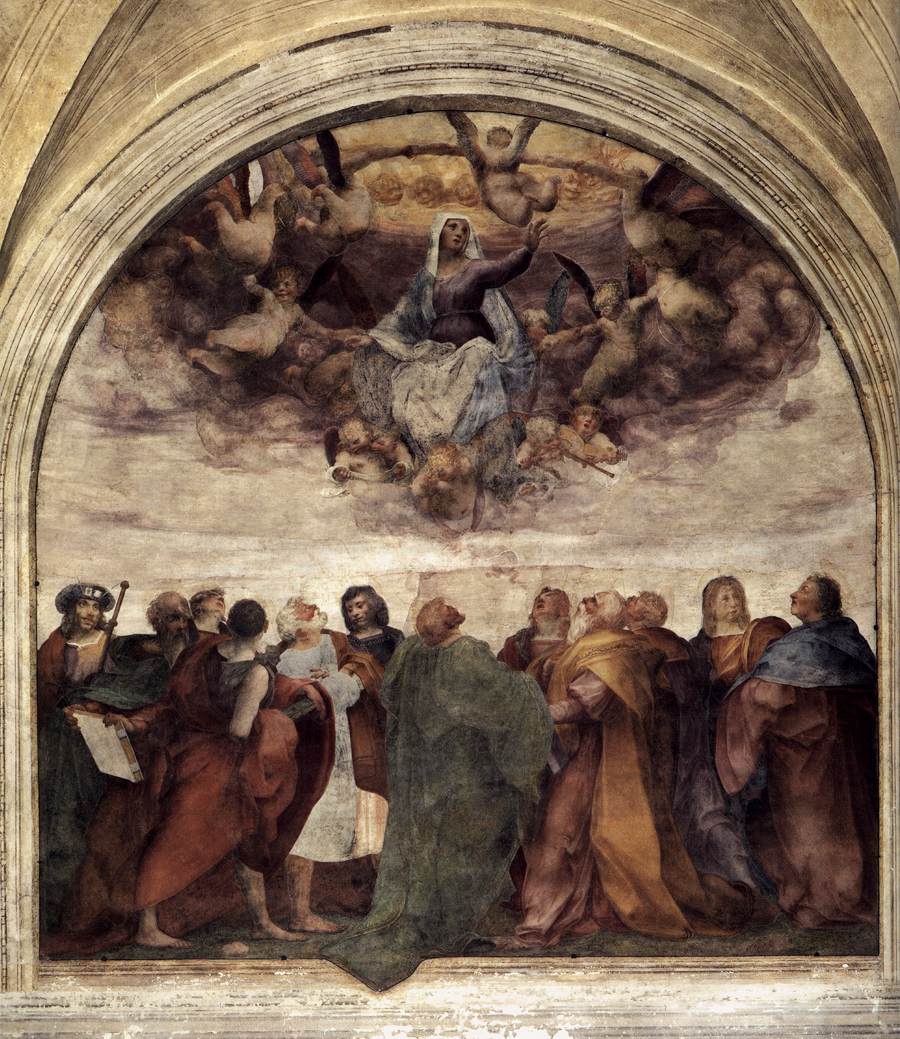
Michelangelo works - part1


Michelangelo Buonarroti was born in 1475 in Florence, Italy, and came
into his own at the height of the Renaissance.
For an artist of his talent and abilities, it was simply perfect timing.
Like his contemporary and rival Leonardo da Vinci, Michelangelo had a wide range of talents, including architecture, sculpture, painting, and poetry, all of which
he used prolifically during the course of his life.
The tasks he undertook were immense, many of them taking several years to complete.
If for no other reason, the sheer scale of some of his projects
(most notably the Sistine Chapel) is enough to prove Michelangelo’s place in history.

Sunday, November 29, 2009

Paris History - part 6


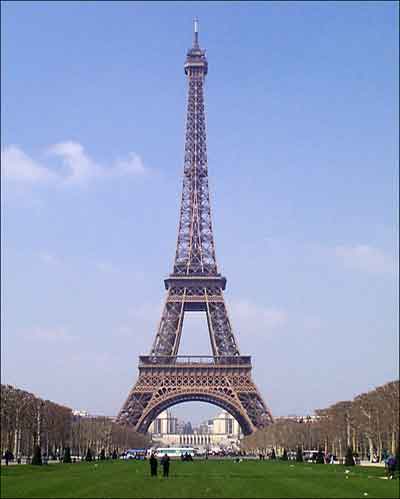
- 1940: Nazi Germany invades Paris and marches on the Champs-Elysées.
A four-year occupation begins. General Charles de Gaulle flees to London and leads a resistance movement from abroad, sending messages to resistants over British radio.
- 1942: The collaborationist Paris government helps organize the massive deportation of French Jews to Nazi concentration camps
first assembling them at the Velodrome d'Hiver near the Eiffel Tower.
- 1944: Paris is liberated by Allied forces.
The city narrowly escapes destruction by the Nazis when
an officer refuses to obey Hitler's orders.

Paris History - part 3


- includes the Louvre begins, surrounding the medieval city.
- Late 14th century: Nearly half of Paris' population is annihilated
by plague, also known as the Black Death.
- 1449: Joan of Arc and French troops defeat the English
at Orléans, ending nearly a decade of Norman English control over France.
The English are eventually driven from France in 1453.
- Late 15th century: The Renaissance (literally, "rebirth") begins in Paris, turning the city into a flourishing center of art, science, and architecture.
Technological advances lead to the city's sprawl.
- Late 16th century: Bloody religious conflicts between Protestants
and Catholics lead to the St. Bartholomew's Day massacre.
Over 3000 Protestant Huguenots perish in the massacre.

Friday, November 27, 2009

Lille - north of France


To many people thinks that Lille sounds like a boring, industrial, coal mining town.
Are they in for a suprise! Lille has got a vey nice historic centre
with old houses and mansions that look like those of Brussels or Amsterdam,
Although the North of France still suffers high unemployemnt rates, this region is getting back to its feet. Lille is becoming an important regional hub again
with fast trains connecting it to Brussels, Paris and London.
Lille has been designated a "European City of Culture" for 2004.

Friday, November 6, 2009

Facts about falcons - 2


NESTING / EGGS / HATCHING
* Their range is about 30 miles with their nest in the center of their range.
They do not like other falcons within 3 miles of their nest site.
* Their favorite spot for a nest is on the edge of a cliff. Their nesting ledge is called an "aerie".
* They don't use a lot of nesting material.
Peregrines prepare a saucer shaped indentation in lose soil, sand, or grass called "scrape".
* The tiercel (male) arrives at the nesting site and begins a lot of fancy aerial displays to attract his mate in early Spring. Sometimes the male will select several locations for a nest and the female makes the final decision.
The female is the boss of the house, and the male is cautious around her.
* Peregrines are ready to start a family when they are about 2 years old.
* Falcons lay 3 - 5 eggs, 2 to 3 days apart.
The group of eggs are called a "clutch".
* Eggs range from soft pink to reddish brown and are slightly
larger than a chicken egg - about the size of a duck egg.
* The male and female share the responsibility of sitting on (incubating) the eggs.
The eggs need to stay at a constant warm temperature and dry, or the embryo
will not survive. If the air temperature is warm, the parents will leave the eggs briefly to hunt.
* The eggs also need to be turned, which we've observed occurs as the birds shift around on the nest. There are times that it looks like the
birds are actually rolling the eggs with their mouth or feet.
* The length of incubation is 33 days from the time "active" incubation starts.
* "Pipping" the shell is when the "eyases" (babies) begin to hatch out.
They do this from the inside with an "egg tooth" (a tiny sharp point) on the end of their beak. The egg tooth disappears almost immediately.
This process can take up to 2 days!

Sunday, November 1, 2009

Falco araea


The mitochondrial cytochrome b gene analysis of Groombridge et al.
showed very strong support for the finding that this species and the Madagascar Kestrel, F. newtoni, have a common ancestor
but the relationship of these two species to the Mauritius Kestrel, F. punctatus, is still unresolved. The molecular results indicate that the Seychelles were colonized by kestrels from Madagascar between 0.3 and 1.0 MYA (million years ago)
much more recent than the origin of the Seychelles archipelago, which is estimated at 55-65 MYA. However, the intermediate Aldabra, Farquhar, and Ameriante islands may not have been exposed until the recent Pleistocene glacial cycles (Braithwaite 1984)
and this enhanced the opportunity for kestrels to colonize the Seychelles from Madagascar
Habitat and Habits: Like the Mauritius Kestrel, but to a lesser extent, this species shows some adaptations for forest dwelling (Groombridge et al. 2002), and prior to settlement by humans, the Seychelles were probably heavily forested.
It favors patches of forest among granite outcrops, but is also widespread in inhabited areas in lowlands with scattered palms and buildings (Kemp and Kemp 1998).
It spends much time perching on rockfaces, buildings, or among palm fronds and tree branches.
Food and Feeding Behavior: Feeds mainly on lizards, but also on small rodents, small birds, and insects. Prey is always taken from a perch (Feare et al. 1974) and is caught from branches, foliage, on the ground, or on the wing.
This species does not hover like some other kestrel species, and Feare et al. (1974) suggested that such an adaptation is not suited for foraging in forest.
Breeding: Nests mainly in rock cavities, but also at the base of palm fronds, on buildings, or in tree holes in developed areas (Kemp and Kemp 1968).
Conservation: Formerly more common and occurring on more islands (Vesey-Fitzgerald 1940). Increasing settlement on the Seychelles, following human colonization in 1770, resulted in the clearance of native forests for commercial forestry and agriculture during the 18th and 19th centuries and a decline in the kestrel population (Cheke 1987).
Numbers declined even more precipitously in the 1960s and 1970s, due to habitat degradation, persecution, predation by introduced mammals (rats and cats), and introduction in the 1950s of the Barn Owl, which became a serious predator on young and adult kestrels
Subsequently, the species has recovered to some extent
It is categorized as Vulnerable by BirdLife International.
Thursday, October 22, 2009

American Black Bear - wallpaper


American Black Bear - wallpaper

American Black Bear


American black bears are like all the other bears
we have written about so far in my project.
Although they are usually black they can actually be brown
reddish brown or even white.
The white ones are called Kermode or spirit bears.
An adult black bear can be 130 to 190 centimetres long
and weigh 60 to 300 kilograms depending on how much food is available.
Cubs at birth weigh 225 to 330 grams.
Black bears like forests in Mexico, the United States and Canada
"White" black bear or Spirit bear
Spirit bear
Black bears eat lots of different things depending on what they can find.
They especially like insects and berries, but will sometimes hunt
baby deer and baby moose.
They would also catch salmonBlack bear with cubs in den
Cubs are usually born in January and February ina special den.
There can be 5 to 6 cubs in a litter and they stay with their mum
for one year and a half. In the wild they live up to 20 to 25 years.
They usually have twins.