Showing posts with label Flamingos. Show all posts

Sunday, November 29, 2009

Paris History - part 6


- 1940: Nazi Germany invades Paris and marches on the Champs-Elysées.
A four-year occupation begins. General Charles de Gaulle flees to London and leads a resistance movement from abroad, sending messages to resistants over British radio.
- 1942: The collaborationist Paris government helps organize the massive deportation of French Jews to Nazi concentration camps
first assembling them at the Velodrome d'Hiver near the Eiffel Tower.
- 1944: Paris is liberated by Allied forces.
The city narrowly escapes destruction by the Nazis when
an officer refuses to obey Hitler's orders.

Saturday, November 21, 2009

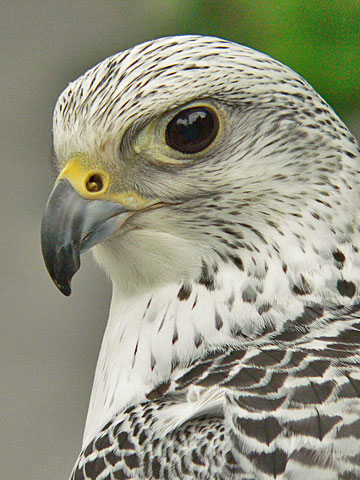
Gyrfalcon


The gyrfalcon is the largest of all falcon species.
The Gyrfalcon breeds on Arctic coasts and islands of North America, Europe and Asia.
It is mainly resident, but some Gyrfalcons disperse more widely
after the breeding season, or in winter .
Its scientific name is composed of the Latin terms for a falcon, Falco, and for
someone who lives in the countryside, rusticolus.
This species is a very large falcon, about the same size as the largest buteos.
Males are 48 to 61 cm long, weigh 805 to 1350 g
and have a wingspan from 110 to 130 cm (43 to 51 in).
Females are rather bulkier and larger at 51 to 65 cm (20 to 26 in) long,
a weight of 1180 to 2100 g (2.6 to 4.6 lbs) and have a wingspan ranging from 124 to 160 cm .
In dimensions, gyrfalcons lie between
a large Peregrine Falcon and a hawk in general structure; they are unmistakably falcons with pointed wings, but are stockier, broader-winged, and longer-tailed than the Peregrine.

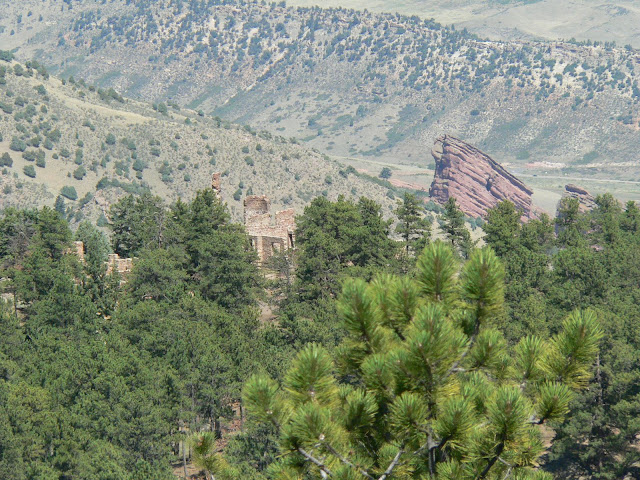
Mount Falcon

Walker ruins and Red Rocks form the summit of Mount Falcon

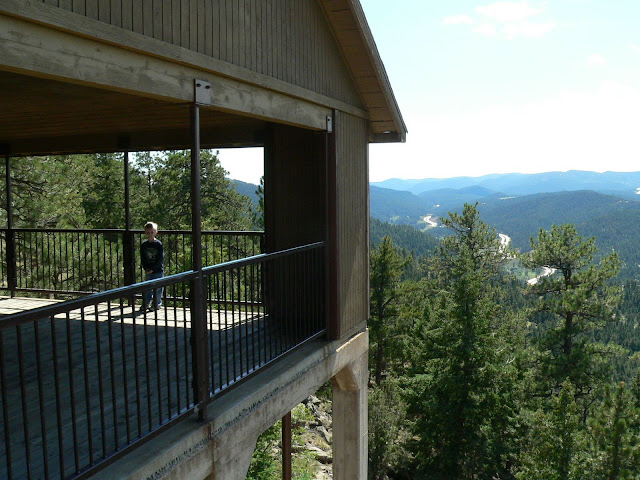
Looking west from the Eagle Eye Shelter


Eagle Eye Shelter near the summit of Mount Falcon

Monday, November 2, 2009

Falco zoniventris


The Banded Kestrel (Falco zoniventris) is a bird of prey belonging to the falcon family Falconidae.
It is endemic to Madagascar and is also known as
the Madagascar Banded Kestrel, Barred Kestrel or
Madagascar Barred Kestrel. Its closest relatives are the
Grey Kestrel and Dickinson's Kestrel of mainland
Africa and the three are sometimes placed in the subgenus Dissodectes.
The species has a shrill, staccato, chattering call and a sharp, screaming
call but is usually silent outside the breeding season.
It is fairly common in the southern and western parts of Madagascar but more local in the north and east and absent from the central plateau.
It occurs from sea-level up to 2000 metres.
It inhabits clearings and edges in forest and woodland.
It rarely hovers, preferring to hunt from a perch.
It feeds on small reptiles such as chamaeleons and
day geckos, large insects such as grasshoppers and beetles and occasionally on birds.
Prey is caught on the ground or snatched from a branch or tree trunk.
Breeding takes place from September to December.
The nest is a simple scrape, usually in the old nest of another bird, especially the Sickle-billed Vanga. The nest is located in a tree hole or amongst epiphytic growth.
Three yellowish eggs are laid.
It is 27–30 cm long with a wingspan of 60–68 cm.
The upperparts are grey and the tail is dark.
The underparts are whitish with dark grey streaks on
the throat and upper breast and dark grey barring on the lower breast and belly.
The feet, eyes and cere are yellow and there is bare yellow skin around the eye. Juvenile birds are browner than the adults with darker eyes and less bare skin around the eye.
source: en.wikipedia.org/wiki/
Friday, October 30, 2009

flamingo pictures


flamingo pictures

Flamingo wallpaper


Flamingo wallpaper

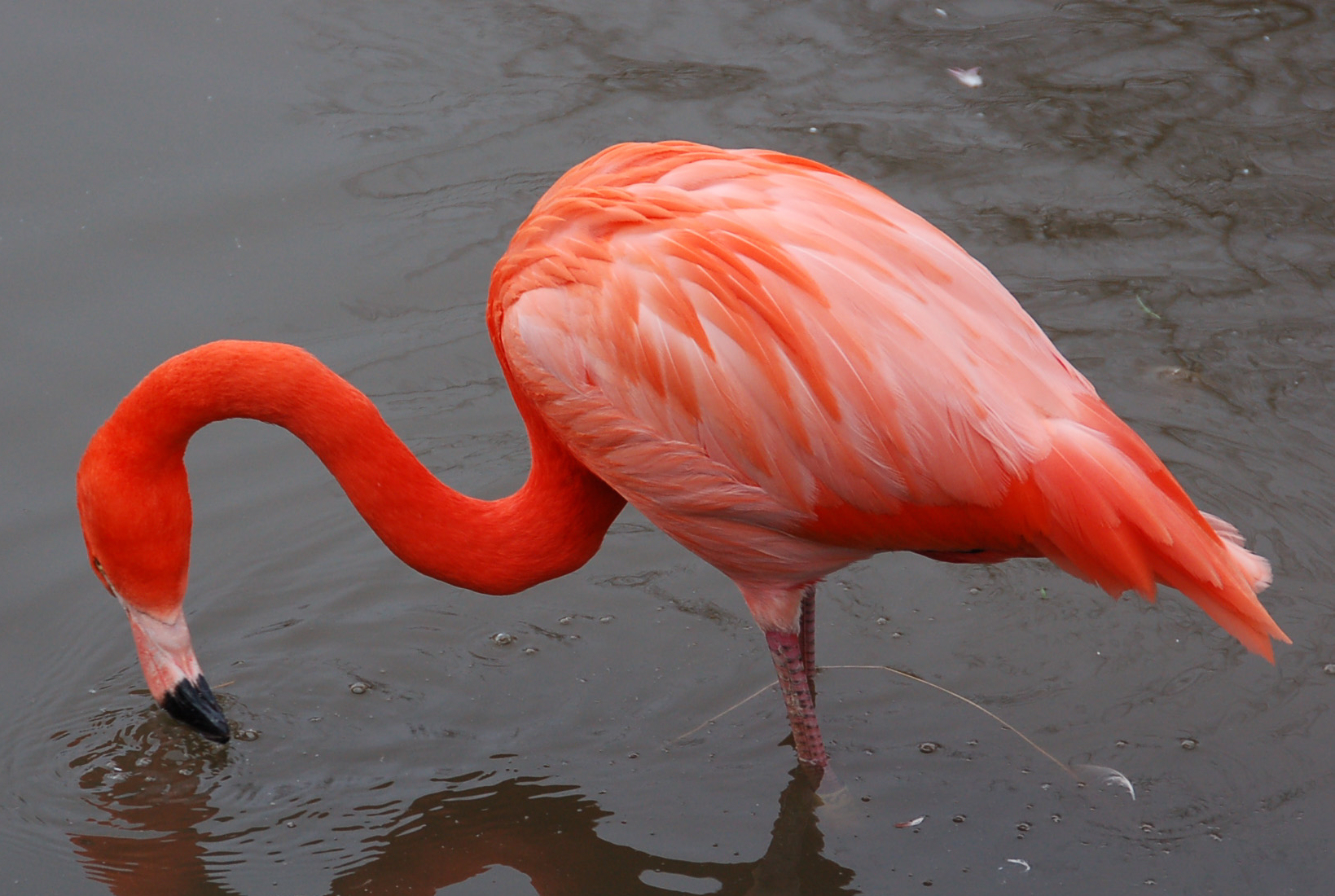
Caribbean Flamingo


Latin Name Phoenicopterus ruber
Location Caribbean, Yucatan Peninsula, Galapagos Islands
Colour Pink/Red/Orange
Height 1.2 - 1.4 m (3.9 - 4.6 ft)
Wingspan Approx. 1.5 m (4.9 ft)
Weight 2.2 - 2.8 Kgs (4.9 - 6.2 lb)
Life Expectancy Up to 40 Yrs (in captivity)
Main Characteristics
Caribbean Flamingos are the only flamingo to naturally inhabit North America.
They stand between 1.2 and 1.4 m (3.9 - 4.6 ft) in height, they have a wingspan of approximately 1.5 m (4.9 ft) and they weigh between 2.2 and 2.8 kgs (4.9 - 6.2 lbs).
They are deep pink/red/orange in colour and
they have the brightest plumage of all flamingo species.
As young birds they are grey in colour but their plumage slowly
turns pink as they mature.
They have long, pink legs with their knees being a slightly darker pink.
Their large bill is downward curving and it is pink in colour with a black tip.
They have narrow wings with their primary
and secondary flight feathers being black in colour and their wing coverts being red.
Caribbean Flamingos have a loud, deep honking call that is similar
to that of a goose. They call loudly during courtship
but they have a quieter call while they are feeding.
Habitat
Caribbean Flamingos are found in the lagoons, mudflats and lakes of the Caribbean, the Yucatan Peninsula and the Galapagos Islands.
They are highly social birds and they live in colonies
that can contain thousands of individuals.
Diet
Caribbean Flamingos feed upon insects, worms, vegetation and algae.
They mainly feed during the day and they sweep their
bill upside down through shallow water picking up food as they go.
They are filter feeders and their tongue
pumps up and down, 5 - 6 times per second, pushing the water out of their beak.
Breeding
Caribbean Flamingos breed in colonies that can contain thousands of individuals and after courtship rituals of synchronized dancing, preening, neck stretching
and honking they mate during April and May.
They produce one chalky white egg that is laid on a mud mound in shallow water.
The nest of each pair is situated approximately 1.5 m (4.9 ft) from neighbouring nests so the chick remains safe from other breeding pairs.
Both parents incubate the egg which takes 27 - 31 days to hatch.
They will defend their nest during the breeding season, otherwise they are non-territorial.
After the chick first hatches they are fed a substance called "crop milk" which comes from the parents' upper digestive tract. Either parent can feed
the chick this way and other flamingos can act as foster feeders.
When the chicks are old enough to walk they gather
together in creches that are watched over by a few adult birds.
By the time young flamingos reach 3 - 5 years of age
they will have reached sexual maturity and gained their full adult plumage.
Predators
The main predators of Caribbean Flamingos
are jaguars, raccoons, birds of prey, margay and humans .
Interesting Facts
Caribbean Flamingos are closely related to the Greater Flamingo and the Chilean Flamingo.
Caribbean Flamingos are also known as:
Rosy Flamingo
American Flamingo
Flamingo comes from the latin word for flame.
The global population of Caribbean
Flamingos is estimated to be between 850,000 and 880,000 individuals.
The flamingo's characteristic pink colouring
is caused by the beta carotene in their diet.

Andean Flamingo


Latin Name Phoenicoparrus andinus
Location South America
Colour Pinkish/White
Height 1 - 1.4 m (3.25 - 4.60 ft)
Wingspan 1 - 1.6 m (3.25 - 5.25 ft)
Weight Up to 4 Kgs (8.8 lbs)
Life Expectancy Up to 40 Yrs
Main Characteristics
Andean flamingos reach heights between 1 and 1.4 m (3.25 - 4.60 ft)
they have a wingspan between 1 and 1.6 m (3.25 - 5.25 ft) and they weigh up to 4 kgs (8.8 lbs).
They are light pink in colour with their head, neck and upper breast being darker.
As young birds they are grey
in colour but their plumage slowly turns pink as they mature.
Their long, thin legs and feet are yellow in colour and their large, downward curving bill is yellow with an extensive black tip.
Andean Flamingos have a loud honking
call that is similar to that of a goose they also communicate
using a wing salute, stretching up their neck and flipping up their tail.
Habitat
Andean Flamingos are found in the lakes and lagoons of the Andes mountains.
They are highly gregarious birds and form flocks containing thousands of individuals.
Diet
Andean Flamingos are filter feeders and they mainly
feed upon diatoms and algae.
Breeding
Andean Flamingos breed in colonies containing thousands of individuals, during December and January. They produce one chalky white
egg that is laid on a mud mound in shallow water. Both parents incubate
the egg which takes 27 - 31 days to hatch.
Upon hatching the chicks are covered in white/grey down feathers and
they are fed a substance called "crop milk" which comes from the parents' upper digestive tract. Either parent can feed the chick this way
and other flamingos can act as foster feeders.
When the chicks are old enough to walk they
gather together in creches that are watched over by a few adult birds.
By the time young flamingos reach 6 - 10 months old they
are ready to fend for themselves and at 3 - 6 years old
they will have reached sexual maturity and gained their full adult plumage.
Predators
Andean Flamingos do not have many predators.
Chicks are preyed upon by culpeo foxes and birds of prey.
Interesting Facts
The Andean Flamingo is closely related to the Puna Flamingo.
Flamingo comes from the latin word for flame.
The flamingo's characteristic pink colouring
is caused by the beta carotene in their diet.

CHILEAN FLAMINGO


location: South America
Habitat: Shallow, salty lakes and lagoons
Chilean flamingos stand four to five feet tall and can weigh anywhere from 13-16 pounds. They have a long neck and long, slender legs.
Their bill is bent downward in the middle.
Most of their body is coverd in pale pink feathers with darker pink and black wings.
Their legs are dull yellow or yellow-gray with dark pink bands at the joints and pink feet.
Flamingos will lock their “knees” (which are really their ankles) and stand on one leg. Standing in this manner helps them to conserve heat.
They typically will stand facing into the wind or rain so that
the water does not get into their feathers.
They have an excellent sense of hearing, but a very poor sense of smell.
These birds are social, usually living in flocks numbering in the thousands.
When in these large groups, they can be quite loud while making their deep, honking noises along with other vocalizations, such as grunting and howling.
They do everything in these groups including breeding, feeding and flying.
The large group is also their main defense.
Having so many individuals increases the possibility of predator sightings, but decreases the probability of an individual becoming prey.
Their main predators are humans and gulls, which eat their eggs.
Flamingos are filter feeders, eating aquatic invertebrates, seeds and algae from shallow water and mud.
They walk along the bottom of the lake kicking up the mud with their feet.
Water is sucked into their beak.
As their tongue pushes the water out, it is filtered through a row of spines, or lamellae, along the edge of the bill, which traps the food.
The pink coloration comes from pigments, called caretonoids, in the tiny animals they eat. In most captive populations, this pink color must be artificially added to the diet.
The courtship displays are quite elaborate.
The males and females will perform a number of head and wing movements which look similar to everyday preening, but are much more rigid.
Flamingos make their nests out of mud by piling the mud and forming it into a large mound about 15 inches in diameter and 1 ½ -2 feet tall.
The female makes an indentation on the top where she will lay her egg. Incubation lasts 27-31 days, and both the mother and father sit on the egg. When it hatches, the chick is covered with gray downy feathers.
Their beaks are straight at birth so that they can be fed by regurgitation from their parents. After a few months the beak curves.
They grow in their adult plumage after about two years.
They become sexually mature at 6 years of age. The typical lifespan in the wild is up to 50 years.
The Chilean Flamingo is listed on the Convention on International Trade of Endangered Species (CITES) Appendix II.
This appendix lists species that are in need of protection and are considered to be threatened, likely to become endangered, if trade is not regulated.
All flamingo populations could easily undergo a decline because they are found in such large numbers, which are necessary for proper breeding, and also because of their fragile wetland habitats.
Humans are the main threat for these birds due to either direct misuse of their home lands or from indirect damage such as changing characteristics
of the land such as water levels.

flamingos - COLORATION


-Feather color varies with species, ranging from pale
pink to crimson or vermilion.
-Caribbean flamingos have the brightest coloration: crimson or vermilion.
• The Chilean flamingo is pale pink.
-Feather coloration is derived from carotenoid pigments
found in a flamingo's food.
-Male and female flamingo coloration is the same.
-Newly-hatched chicks are gray or white.
Juveniles are grayish, taking approximately one to two years to obtain full adult coloration.
- Parents may lose some of their pink coloration while raising young.
- Coloration of a flamingo's legs and feet
varies according to species - from yellow to orange or pink-red. The Andean flamingo is the only species that has yellow legs and feet.

flamingos - size


-The greater flamingo is the tallest flamingo, standing 120 to 150 cm (47-59 in.) and weighing up to 3.5 kg (7.7 lb.).
-The lesser flamingo is the smallest flamingo, standing 80 cm (31.5 in.) and weighing only 2.5 kg (5.5 lb.).
-Males reach full size between one-and-a-half and two years.
-Male flamingos are slightly larger than females, weighing more and having longer wingspans; however, visual sex determination of flamingos is unreliable.
-The wingspan of flamingos ranges from 95 to 100 cm (37-39 in.) for the lesser flamingo to 140 to 165 cm (55-65 in.) for the greater flamingo.
The Caribbean flamingo has a wingspan of 150 cm (59 in.).

Young flamingos


Pink color is common in flamingos.
Young flamingos hatch with gray plumage, but adults range from light pink to bright red due to aqueous bacteria and beta carotene obtained from their food supply.
A well-fed, healthy flamingo is more vibrantly colored and is considered as a more desirable mate. So, what will happen
if a flamingo develops pink phobia? Lots of trouble. Isn't it? Actually
it happened with a pair of flamingo chicks at London Zoo.
The birds, named Little and Large, developed the pink-phobia after being fed using a pink sock puppet.
The cute chicks have since refused to have anything to do with the color pink - which could be a problem when they move into the flamingo pool.
Zoo staff are now hoping they get over their aversion
before developing their distinctive color, reports the Daily Telegraph.
Keeper Alison Brown, 30, said: "To try to encourage Little to feed by himself we've been wearing a hand puppet which imitates adult flamingos,
but unfortunately he was really terrified of the socks."
Ms Brown added: "We'll just have to hope they get used to the color pink
but I'm sure it won't be a problem. Once Little gets his own pink color he'll be fine."

flamingos - FOSSIL RECORD


-Fossil evidence indicates that the group from which flamingos
evolved is very old and existed about 30 million years ago
before many other avian orders had evolved.
-The discovery and study of a fossil in 1976 suggested that flamingos arose from ancient shorebirds.
-Fossilized flamingo footprints, estimated to be
seven million years old, have been found in the Andes Mountains.

flamingos -GENUS SPECIES


-There are five species of flamingos divided into three genera:
-Phoenicopterus ruber is divided into two distinct and geographically separated subspecies: P.r. ruber and P.r. roseus. Some scientists classify these as two separate species.
P.r. ruber, the Caribbean flamingo, is slightly smaller than P.r. roseus.
° P.r. roseus, the greater flamingo, is the largest of the flamingos and has deep pink wings.
• Phoenicopterus chilensis, the Chilean flamingo. Chilean flamingos are slightly smaller than Caribbean flamingos and have gray legs with pink bands at the joints.
• Phoenicopterus minor, the lesser flamingo. (Still sometimes listed in the genus Phoeniconaias). This species is the smallest of all flamingos. The color of the lesser flamingo is brighter than the greater flamingo.
• Phoenicoparrus jamesi, the James' flamingo.
This species is characterized by having all black flight feathers
including the secondary flight feathers, which are red in other species.
• Phoenicoparrus andinus, the Andean flamingo.
This is the only species of flamingo that has yellow legs and feet.
It also has a red spot between the nostrils.

flamingos - Scientific Classification


ORDER - CICONIIFORMES
(ALSO LISTED AS ORDER PHOENICOPTERIFORMES)
-Members of this order have long legs and long necks.
Order Ciconiiformes also includes storks, herons, and ibises.
-The classification of flamingos has puzzled taxonomists for years.
The skeletal structure, egg-white proteins
and behavior patterns cause scientists to link flamingos to various groups.
-The pelvis and ribs of a flamingo are similar to those of storks.
• The composition of egg-white proteins in flamingo eggs are similar to that of the herons.
• Behavior patterns, especially those of chicks, link them closely to geese (Order Anseriformes). Flamingos also have webbed feet and waterproof plumage like geese.
• More recently, taxonomists have grouped flamingos in their own Order - Order Phoenicopteriformes.
FAMILY - PHOENICOPTERIDAE
-Flamingos are the only members of the family Phoenicopteridae.
Distinguishing characteristics include long legs; a long, curved neck; and a goose-like voice.

Flamingos habitat


-The flamingo's most characteristic habitats are large alkaline or saline lakes or estuarine lagoons that usually lack vegetation.
Lakes may be far inland or near the sea.
All flamingo species are found in tropical and subtropical areas.
-A variety of habitats are used by flamingos: mangrove swamps
tidal flats, and sandy islands in the intertidal zone.
-The presence or absence of fish may have a great influence
on the use of lakes by some flamingos.
-The Chilean flamingo is scarce or absent in lakes with fish.
It is present, usually in large numbers, where there are no fish with
which to compete for food.
-The introduction of fish to some lakes may seriously affect the distribution of the Chilean flamingo as well as the greater and
Caribbean flamingos, since they all feed primarily on invertebrates.
Other flamingo species are not affected because of different food sources.

Flamingos distribution


DISTRIBUTION
-All flamingos are found in tropical and subtropical areas.
-Populations of Chilean flamingos are
found in central Peru, both coasts of southern South America (mainly in the winter), Argentina, Uruguay, Paraguay, Peru, Bolivia, and southern Brazil.
Stragglers have been reported on the Falkland Islands and Ecuador.
-The lesser flamingo is primarily an African species.
Populations are found in eastern, southwestern, and western Africa. In addition, a sizable population nests in India. Stragglers can be found as far north as southern Spain.
-The James' flamingo has the most restricted range of all flamingo species.
They are found in southern Peru, northeastern Chile, western Bolivia, and northwestern Argentina.
-Andean flamingos are found in southern Peru, north-central Chile, western Bolivia, and northwestern Argentina.
- The Caribbean flamingo is found throughout the Caribbean ( Cuba, the Bahamas, the Yucatan, Turks and Caicos), the Galapagos Islands, and the northern part of coastal South America.
- The greater flamingo has the most widespread distribution of all flamingo species. Populations are found in northwest India, the Middle East, the western Mediterranean
and Africa.
Limited numbers of this species can be found over much of northern Europe and eastward to Siberia.