Showing posts with label American Kestrel. Show all posts

Sunday, November 29, 2009

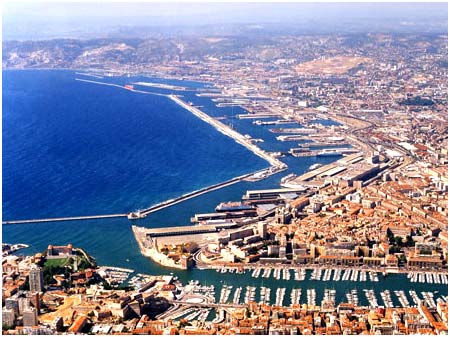
Marseille City


Marseille is the 2nd most populous French city as well as the oldest city in France.
It forms the third-largest metropolitan area, after those of Paris and Lyon.
Located on the south east coast of France on the Mediterranean Sea, Marseille is France's largest commercial port. Marseille is the administrative capital of the Provence-Alpes-Côte d'Azur region, as well as the administrative capital of the Bouches-du-Rhône department.
Its inhabitants are called Marseillai

Friday, November 27, 2009

Chantilly - north of France


From the 10th to the 14th century, Chantilly belonged to the Lords of Senlis that built the first castle which there are no remains today. Between 1386 and 1394, Pierre dÍOrgemont built a medieval fortress. The only remains today are the tower foundations in the moat.

Berck sur Mer - north of France


For a beach holiday in the north of France, Berck sur Mer offers you everything you could want - except maybe the hot mediterranean sun of the Midi.
The sandy beaches are great, there is a casino
and there are many activities in and around Berck.
The ideal place for an active beach holiday.
The towns of Boulogne, Arras and Lille are not far
and even Paris is within reach for a day trip.
For thos looking for a bit of culture, Berck has a museum and a few churches worth visiting.

Sunday, November 22, 2009

Teita Falcon


The Teita Falcon has a body length of 10 - 12 inches
an approximate wingspan of 1 1/2 - 2 feet, and weighs 7 1/2 - 11 ounces.
Teita Falcons roost and nest in high cliffs and hunt over the dry terrain below in eastern and southeastern Africa.
This falcon eats mostly birds and some insects.
The prey is taken in the air after the falcon dives toward the prey from a perch or during flight.
Teita Falcons nest in protected holes on cliff faces.
The female lays 2 - 4 eggs in a scrape or old stick nest.
The eggs are incubated for 31 - 33 days.
The young falcons fledge at 42 days and are independent of parental care about 3 weeks later.
The scientific name comes from the Latin words falco, meaning hook-shaped (falcate) and may refer to the beak or claws; fascia, pertaining to streaks or bands; and nucha, referring to the back of the head (nape). The common name is from the Teita Hills in Kenya, Africa where the bird was first discovered.
The common name can also be spelled Taita Falcon.
FACTS:
-The robust, long-winged Teita Falcons have a short tail.
Their flight is fast and somewhat heavy looking, but they are adept at aerial hunting.
-Most birds of prey show color differences between juvenile and adult birds.
This may help to provide the young with
better camouflage and reduce conflicts with aggressive adults defending their territory.

American Kestrel


The American Kestrel has a body length of 9 - 12 inches, a wingspan
of 20 - 24 inches, and weighs 3 1/2 - 5 1/2 ounces.
American Kestrels are found throughout most of North, Central, and South America.
They inhabit tropical lowlands, deserts, urban areas, and open-altered lands, such as agricultural fields.
Kestrels feed mainly on crickets, grasshoppers, mice, voles, lizards, and snakes.
This falcon searches for its prey from an overlooking perch or
by hovering in the air.
When the prey is spotted, the kestrel will plunge down to catch it.
Kestrels are cavity nesters, using natural hollows in trees, cacti, dirt banks and cliffs, or man-made boxes, building ledges, and other cavities in buildings.
Females lay 4 - 6 eggs.
The eggs are incubated about 28 days and the young birds fledge about 28 days after hatching. Kestrels are able to reproduce as early as 1 year of age.
The scientific name comes from the Latin word falco, meaning hook-shaped (falcate) and may refer to the beak or claws, and espervier, the Latinized French word for a sparrow hawk and probably refers to its size and prey.
The American Kestrel has been called a Sparrow Hawk, Killy Hawk
(for the sound they make), or Windhover (for their ability to hover).
FACTS:
- The American Kestrel is the smallest and most numerous of the North American falcons.
-While the young birds are practicing their hunting skills, kestrels
will often hunt in family units.
- There is a color difference between the sexes.
The male kestrel has blue on its wings, while the female is mostly brown.