Showing posts with label Asia. Show all posts

Sunday, November 29, 2009

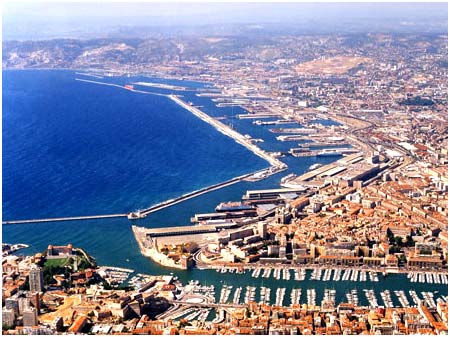
Marseille City


Marseille is the 2nd most populous French city as well as the oldest city in France.
It forms the third-largest metropolitan area, after those of Paris and Lyon.
Located on the south east coast of France on the Mediterranean Sea, Marseille is France's largest commercial port. Marseille is the administrative capital of the Provence-Alpes-Côte d'Azur region, as well as the administrative capital of the Bouches-du-Rhône department.
Its inhabitants are called Marseillai

Haut-Koenigsbourg Castle - france


No introduction is really needed for the Haut-Koenigsbourg
which is one of France's most widely visited monuments attracting 600,000 visitors per year.
The castle occupied a strategic position when it was built back in the 12th century.
Its purpose was to protect the wine and wheat routes to the north, and the silver and salt routes running from west to east.
It was reduced to rubble by the Swedes during
the Thirty Years War and abandoned.
In 1899, Kaiser Wilhelm II decided to have the castle fully
rebuilt with the aim of making this a museum and a symbol of Alsace's return to Germany.
Although built relatively recently, the castle has remained true to the spirit of mediaeval architecture.
Inside the building, the sheer refinement of the rooms is extremely impressive, with their wall paintings, Renaissance furniture and enormous cast iron stoves.
A collection of mediaeval weapons is located
in the basement including crossbows, swords and armour of all kinds.

Sunday, November 22, 2009

Merlin - falcon


The Merlin has a body length of 10 - 13 inches, a wingspan
of 20 - 26 inches, and weighs 5 - 8 1/2 ounces.
Merlins inhabit boreal forests, coastal forests, prairies
and shrub-steppes of North America and Eurasia from sea-level to tree line.
Small to medium birds are the staple foods for Merlins, but they will also hunt bats, insects, and small rodents.
This falcon usually catches prey in the air after a swoop from
a perch or while flying low over the ground.
The prey is sometimes captured after a speedy pursuit.
Uneaten prey may be hidden for later consumption.
These falcons use old stick nests from crows, magpies, and hawks, or cliff ledges and natural cavities.
The female lays 3 - 6 eggs that are incubated for 27 - 32 days.
The young fledge 1 month later.
Merlins are able to breed at 1 year of age.
The scientific name comes from the Latin words falco, meaning hook-shaped (falcate) and may refer to the beak or claws, and columbarius, pertaining to pigeons.
The common name may have been derived from the Latin word merula, meaning a black bird. Merlins are also known as Pigeon Hawks, Bullet Hawk, Black Pigeon Hawk, Richardson’s Pigeon Hawk, and Suckley’s Pigeon Hawk.
FACTS:
-The color of the Merlin’s plumage is slightly different between the two sexes.
The slate blue color of the male is brighter and more contrasting than the female’s uniformly drab brown color.
- In the sport of falconry during the Middle Ages, the Merlin was flown in spectacular ringing flights in pursuit of Skylarks by the ladies of the court.
Falconers call the male Merlin a jack.
Facts About earth in September Equinox


There are two interesting facts which are not
often noticed, but should be shared
with students to get them interested in this subject.
First, the equinox( falling this year on September 22, 2009) means that the length
of the day is exactly the same all over the earth: from the North Pole
to the South Pole, and from both Temperate Zones, to the Tropics, to the Equator.
Second, which I’ve noticed over many years of watching the world weather, is that TEMPERATURES equal distances north and south
of the equator (in similar continental zones, of course), are roughly the SAME at this time of year.
For example, I live in North Africa. Having travelled many
years ago to Cape Town, South Africa, I’ve continued to watch
the temperatures there, comparing them with the North African temperatures.
Around the time of either the March or September equinoxes, the temperatures
in both North Africa and South Africa are roughly the same!