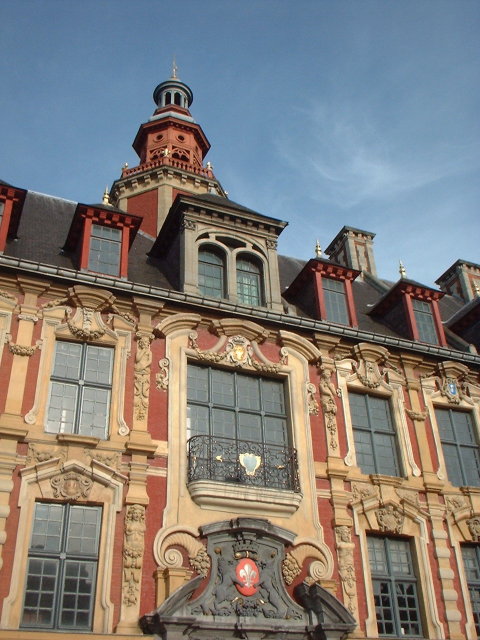
Showing posts with label United States. Show all posts

Thursday, January 7, 2010

Wednesday, January 6, 2010

Leonardo da Vinci - Story life - part 10


After the death of Charles d'Amboise in 1511, Leonardo accepted the protection of Giuliano de Medici, brother of the future Pope Leo X, with whom he then traveled to the papal court in Rome. Leonardo, by now 61 years old, apparently hoped to become a court painter there.
However, he never received any major commissions, comparable to those that the Pope had given to Raphael and Michelangelo.
Both these artists were working in Rome at the time
but Leonardo had little direct contact with them. During this time
he probably created St. John the Baptist (c.1513-1516), and there is one more John the Baptist (featuring many attributes of Bacchus, c. 1513-1516), which is also identified with Leonardo.

Leonardo da Vinci - Story life - part 9


From 1506 to 1512, Leonardo lived mostly in Milan under the patronage of Charles D'Amboise, the French governor of the city.
During these years he created Leda and the Swan (c.1505-1510), which is now known only through a number of copies, and the second version
of The Virgin of the Rocks (1506-1508).
He worked on the equestrian statue for General Giangiacomo
Trivulzio, which was -- once again -- never realized.
He also continued his anatomical studies.

Tuesday, December 8, 2009

The Baptism of Christ


The Baptism of Christ
Leonardo da Vinci

Portrait of Cecilia Gallerani


Leonardo da Vinci 9
Portrait of Cecilia
Gallerani (Lady with
an Ermine). c.1490
Oil on wood.
Czartorychi Muzeum
Cracow, Poland

antisthenes


Antisthenes (c. 444-365 BC), the founder of the Cynic school of philosophy, was born at Athens of a Thracian mother, a fact which may account for the extreme boldness of his attack on conventional thought.
In his youth he studied rhetoric under Gorgias, perhaps also under
Hippias and Prodicus. Some suggest that he was originally in good circumstances, but was reduced to poverty.
However this may be, he came under the influence of Socrates, and became a devoted pupil.
So eager was he to hear the words of Socrates that
he used to walk daily from Peiraeus to Athens, and persuaded his friends accompany him.
Filled with enthusiasm for the Socratic idea virtue, he founded a school of his own in the Cynosarges. Thither he attracted the poorer masses by the simplicity of his life and teaching.
He wore a cloak and carried a staff and a wallet, and this costume became uniform of his followers.
Diogenes Laertius says that his works filled ten volumes, but of these, fragments only remain.
His favourite style seems to have been the dialogue, wherein see the effect of his early rhetorical training.
Aristotle speaks of him as uneducated and simple-minded, and Plato describes him as struggling in vain with the difficulties of dialectic.
His work represents one great aspect
of Socratic philosophy, and should be compared with the Cyrenaic and Igarian doctrines

Wednesday, December 2, 2009

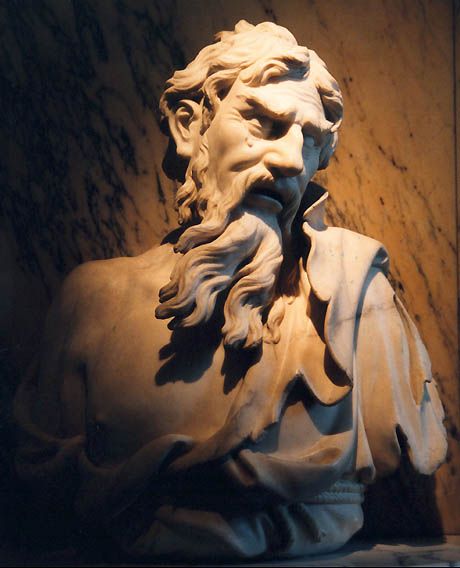
Heraclitus - Philosophers


Heraclitus was a rich man from Ephesus and lived c.500, during the Persian occupation
of his home town.
His philosophical work consists of a series of cryptical pronouncements that force a reader to think. Unfortunately, a great part of his work is lost, which makes it very difficult to reconstruct Heraclitus' ideas.
It seems certain, however, that he thought that the basic principle of the universe was the logos, i.e. the fact that it was rationally organized and therefore understandable.
Bipolar oppositions are one form of organization, but the sage understands
that these oppositions are just aspects of one reality.
Fire is the physical aspect of the perfect logos.

Portrait bust of Epicurius - Louvre Museum


Epicurius lived from approx 341 - 270 BC was an ancient Greek philosopher and
the founder of the school of philosophy
called Epicureanism.

sculpture of the mythological


The Three Graces is a sculpture of the mythological three charites, daughters of Zeus – identified on some engravings of the statue as Euphrosyne
Aglaea and Thalia - who were said to represent beauty, charm and joy.
The Graces presided over banquets and gatherings
primarily to entertain and delight the guests of the Gods.

Sunday, November 29, 2009

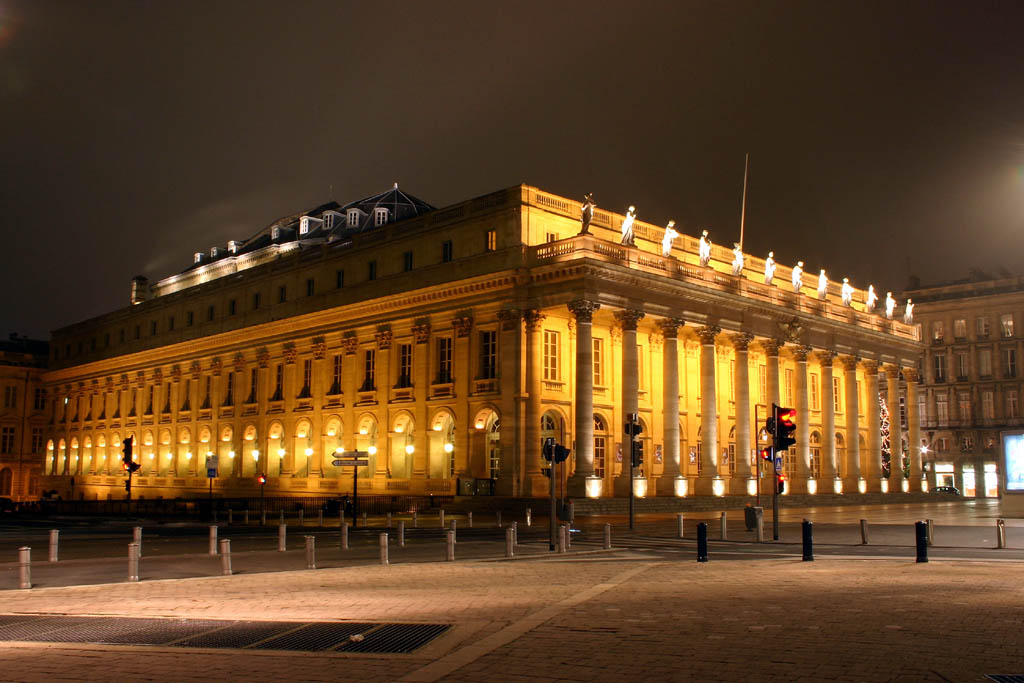
Bordeaux - france


Bordeaux is a city of grandeur and sophistication, of old money and legendary vintages
where connoisseurs can take the time to savour wines and cuisine perfected over generations.
This grande dame on the banks of the softly-flowing Garonne ages with effortless grace
its wide boulevards, majestic squares and elegant 18th-century mansions are filled with timeless charm. Surrounded
by ancient châteaux and some of the most valuable vineyards in the world, each autumn harvest brings another crop of imperious reds and sweet whites.
Beyond, the precious earth fades into the dunes of the Atlantic seaboard
where the waters are rich with oysters and seafood destined for the tables of the Bordeaux’s gourmands.
Here the good life is served on a plate and time is measured by the popping of corks.
Beautifully Bordeaux
Bordeaux is perhaps the world’s greatest wine region and you can visit numerous vineyards and châteaux.
In the Médoc region to the north of the city you can visit one of the finest vineyards at the world-famous Château Margaux
Local knowledge

Versailles - franch


Versailles is the palace of the versalmonator, means a power house or a chateau.
In the older days, Versailles was a small village, it is only now that
it is a sub urban part of Paris which is the capital of France.
Versailles in late 17th century
was considered the strongest political power house where the monarch used to sit
when the royal family was enforced to come back to Paris.
The political side to the building has made it so famous that tourists like to pay their visit to this building.
The building covers a total area of 110,000 square meters with 700 rooms in it with 67 staircases and more that 200 windows.
The Versailles for sure is a grand place worth visiting.
The building has lots of paintings, handmade sculptures, drawings, objects and furniture.
It was during the year 1038, when for the first time, the name Versailles was coined. During this period, the villagers of this village was on a small castle and there was a church which was governed by the local landlords of the village.
Versailles was built by the French men and it was also called the unofficial capital of France.
It is only ten kilometers away from Paris.
The way in which the streets of Washington DC are made have been based upon Versailles’ model of streets. The city welcomes its visitors with open arms
and provides one of the best luxurious hotels, food & site seeing facility to them.
Whenever visitors plan to visit this part of the city, they make
it a long holiday so that they can spend quality time in the Versailles.

Saturday, November 28, 2009

Clermont - Ferrand


Clermont-Ferrand is a city in central France, the capital of the Auvergne region.
Population 140,000.
Clermont-Ferrand is famous for the chain of extinct volcanoes that ring the city, including the highest, Puy-de-Dôme, some 13 km away from the city centre.
One of the oldest cities of France, its first mention was by the Greek geographer Strabo, who called it Nemessos, a Gaulish word for a sacred forest.
The settlement witnessed the famous Battle of Gergovia, in which the Gauls led by Vercingetorix triumphed temporarily over the Romans led ultimately by Julius Caesar.
After the Roman conquest, the city was renamed Augustonemetum, a name which combined its original Gallic name with that of the Emperor Augustus.
Its population was estimated at 15,000–30,000 inhabitants in the 2nd century CE
making it one of the largest cities of Roman Gaul.
In 848, the city was renamed Clairmont, after the castle Clarus Mons. Clairmont was an episcopal city ruled by its bishop, and famously the starting point
of the First Crusade raised to free Jerusalem from Muslim domination.
Pope Urban II preached Crusade in 1095 at the Council of Clermont.
In 1120, to counteract the power of the clergy, the counts of Auvergne founded the city of Montferrand on the model of the new cities of the Midi. In 1551, Clermont became a royal city, and in 1610, the inseparable property of the Crown.
On 15 April 1630, the Edict of Troyes (the First Edict of Union) forcibly joined the two cities of Clermont and Ferrand.
This union was confirmed in 1731 by Louis XV with the Second Edict of Union. At this time Montferrand was no more than a satellite city of Clermont, in which condition it remained until the beginning of the 20th century. Wishing to retain its independence, Montferrand made three demands for independence, in 1789, 1848, and 1863.

In the 20th century, the construction of the Michelin factories and city gardens definitively reunited Clermont and Montferrand. Today, although the two cities are amalgamated
one may find in Clermont-Ferrand two distinct downtowns
and Montferrand retains a strong identity.
Clermont-Ferrand remains home
to the famous French tyre manufacturing company Michelin.

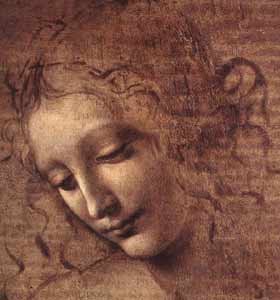
Chateau de Chambord


The royal Château de Chambord at Chambord, Loir-et-Cher, France is one of the most recognizable châteaux in the world because
of its very distinct French Renaissance architecture
that blends traditional French medieval forms with classical Italian structures.
Chambord is the largest castle in the Loire Valley, but was built to serve
only as a hunting lodge for François I, who maintained
his royal residences at Château de Blois and at Château d'Amboise.
The original design of the Château de Chambord is attributed, though with several doubts, to Domenico da Cortona, whose wooden model for the design survived long enough to be drawn by André Félibien in the seventeenth century.

Friday, November 27, 2009

France - Amiens Cathedral


Amiens cathedral, also know as the cathedral of our lady of Amiens, is the tallest cathedral in France.
Amiens Cathedral is the heart of Picardy which is a couple of hours north of Paris.
The interior volume is estimated as 200,000 meters cube .
It is listed as one of world heritage site by UNESCO in the year 1981.
It is the tallest gothic church in from the Gothic era.
The height of the ceiling is about 43 meters and the width of the nave is about 14.7 meters.
The interior ceiling is a modern 14-story building.
This cathedral was built in the year 1152 and was influenced by the roman style.
The cathedral was burnt in the year 1218 due to a lightening strike.
The reconstruction of the cathedral was started in the year 1220 and completed in 1245.
Although there are several cathedrals in the surrounding area
the Amiens Cathedral is the largest and very popular cathedral in France.

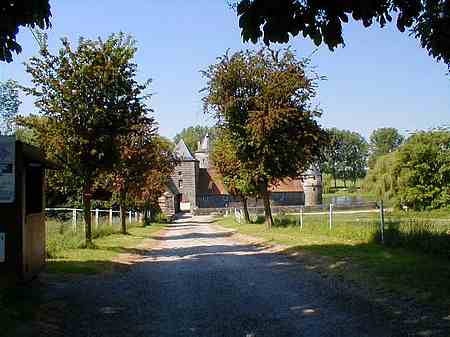
Olhain - north of France


he Olhain park is close to Lille and Arras and is perfect for a day trip.
The park provides you with the opportunity to escape the cities and enjoy the outdoor.
Thanks to its 450 hectares of forest ( 300 of which are national forest )
its numerous sports and leisure activities equipments (golf, tennis, swimming pool, brasserie, camping-site...)
and its festive animations (exhibitions, shows, meetings...)
Olhain Park constitutes a must as the Leisure Activities destination .
There are many walking paths (hiking or mountain bike)
a particularly rich and varied flora and fauna which will succeed to seduce the nature lovers.

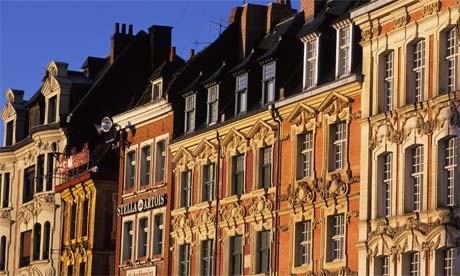
Lille Culture Capital of Europe in 2004


Lille, in northern France, has been named the 2004 Culture Capital of Europe
which means lots of money has been spent on Lille cultural attractions.
Eurostar trains stop at Lille, so it's an easy destination
to visit on your way to Paris.

Dunkerque - north of France


Dunkerque is a small town in the northernmost tip of France.
It is very close to the border with Belgium
and is actually located on the shores of the North Sea.
Dunkerque’s cultural heritage is illustrated by the wide variety of resources and events: museums, cinemas, theatre, conference centre, cafes with live music, festivals, architectural and historic sites and, of course, the Carnival.
For two months (late January to early March), Dunkerque celebrates the festival that once gave a cheerful send-off to fishermen sailing north to fish
in the dangerous icy waters round Iceland.
Each weekend a different group holds a procession, with crowds of carnival revellers led by a band, and featuring visiting "giants" such as the Scandinavian warrior Reuze Papa
and his wife from Cassell. In the evenings each group holds a lively ball.
Colourful Flemish tradition dates back to the Counter-Reformation in the early 16th century.
It came from Spain and Portugal, when Flanders was part of the Spanish Netherlands.
The Catholic church set out to encourage popular expressions
of piety to ward off the threat of Protestantism.
Large figures were carried in annual religious processions to mark occasions such as the day cock of the town's patron saint.
Most were biblical figures like Goliath or St. Christopher, and they gradually acquired various attendants in masks and costumes.
Each town has a voluntary association, which keeps up the tradition, looks after and repairs the giant figure, and provides the bearers and attendants who accompany
the giant as he or she dances through the streets - while bands play a special giants' tune.
The giants were traditionally made of flexible wickerwork
and they could actually dance with the music of the procession.
Seven hundred hectares of dunes, 15 kilometres of beaches
and a recognised sailing resort make the Flanders coast an increasingly popular seaside resort for tourists who can find quality activities and entertainment all year round.
More than a hundred sports clubs mean you can practice virtually any sport, with excellent facilities.
The availability of plentiful amenities and the organising
of regular international events bear witness to Dunkerque’s sporting dynamism

Fontainebleau - France


Fontainebleau, a lovely historical town located to the south of Paris, France.
It is renowned for its large and scenic forest of Fontainebleau
the largest state forest in France, covering an area of 50,000 acres.
The town is enriched with a population of 17,000 people enclosed by an area of 175 square kilometers.
Fontainebleau is a favorite weekend getaway for Parisians.
It is also famous for the historical palace
Chateau de Fontainebleau and INSEAD, one of the world’s best business schools.
Inhabitants of Fontainebleau are called Bellifontains.
In spite of a large number of tourists visiting every day
the town retained its old world charm and ancient looks which makes it an attractive French town.
As we enter into the Fontainebleau palace from the town, there is an attractive royal gate which leads to the palace grounds.
Then comes the horse shoe shaped staircase which leads into the palace.
The palace is the largest French royal building
which is arranged around a series of courtyards and parks.
It is also known as the dictionary of architecture.
One of the several attractive buildings to be found
in the centre of France is the Fontainebleau church which is located in the town’s main street.
The town of Fontainebleau can be easily reached
from the centre of the Paris as there are number of trains from
Gar De Lyon station.

Saturday, November 21, 2009

Saker Falcon Facts


Origin - Southeast Europe and into Asia.
Habitat - Mostly in open plains or steppes.
Nesting -Often nests in heronries.
Facts -The Saker is a ferocious falcon and often attacks prey larger than itself.
It will prey on a wide range of animals, mainly rodents, or birds such as pigeons, partridges, etc.
The Saker is significantly larger than the Peregrine falcon.
It has a large wingspan and needs lots of space to fly in, so it excels
at long distance flying. It can be identified by its brownish colouring similar to the kestrel.
This bird is a great favourite with falconers.