Showing posts with label animals rights facts. Show all posts

Sunday, November 29, 2009

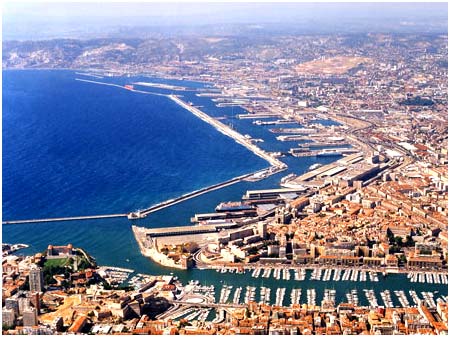
Marseille City


Marseille is the 2nd most populous French city as well as the oldest city in France.
It forms the third-largest metropolitan area, after those of Paris and Lyon.
Located on the south east coast of France on the Mediterranean Sea, Marseille is France's largest commercial port. Marseille is the administrative capital of the Provence-Alpes-Côte d'Azur region, as well as the administrative capital of the Bouches-du-Rhône department.
Its inhabitants are called Marseillai

Haut-Koenigsbourg Castle - france


No introduction is really needed for the Haut-Koenigsbourg
which is one of France's most widely visited monuments attracting 600,000 visitors per year.
The castle occupied a strategic position when it was built back in the 12th century.
Its purpose was to protect the wine and wheat routes to the north, and the silver and salt routes running from west to east.
It was reduced to rubble by the Swedes during
the Thirty Years War and abandoned.
In 1899, Kaiser Wilhelm II decided to have the castle fully
rebuilt with the aim of making this a museum and a symbol of Alsace's return to Germany.
Although built relatively recently, the castle has remained true to the spirit of mediaeval architecture.
Inside the building, the sheer refinement of the rooms is extremely impressive, with their wall paintings, Renaissance furniture and enormous cast iron stoves.
A collection of mediaeval weapons is located
in the basement including crossbows, swords and armour of all kinds.

Sunday, November 22, 2009

Merlin - falcon


The Merlin has a body length of 10 - 13 inches, a wingspan
of 20 - 26 inches, and weighs 5 - 8 1/2 ounces.
Merlins inhabit boreal forests, coastal forests, prairies
and shrub-steppes of North America and Eurasia from sea-level to tree line.
Small to medium birds are the staple foods for Merlins, but they will also hunt bats, insects, and small rodents.
This falcon usually catches prey in the air after a swoop from
a perch or while flying low over the ground.
The prey is sometimes captured after a speedy pursuit.
Uneaten prey may be hidden for later consumption.
These falcons use old stick nests from crows, magpies, and hawks, or cliff ledges and natural cavities.
The female lays 3 - 6 eggs that are incubated for 27 - 32 days.
The young fledge 1 month later.
Merlins are able to breed at 1 year of age.
The scientific name comes from the Latin words falco, meaning hook-shaped (falcate) and may refer to the beak or claws, and columbarius, pertaining to pigeons.
The common name may have been derived from the Latin word merula, meaning a black bird. Merlins are also known as Pigeon Hawks, Bullet Hawk, Black Pigeon Hawk, Richardson’s Pigeon Hawk, and Suckley’s Pigeon Hawk.
FACTS:
-The color of the Merlin’s plumage is slightly different between the two sexes.
The slate blue color of the male is brighter and more contrasting than the female’s uniformly drab brown color.
- In the sport of falconry during the Middle Ages, the Merlin was flown in spectacular ringing flights in pursuit of Skylarks by the ladies of the court.
Falconers call the male Merlin a jack.
Monday, November 2, 2009

Facts about animals


1. In many circuses, wild and exotic animals are trained
through the use of intimidation and physical abuse.
Former circus employees have reported seeing animals beaten, whipped, poked
with sharp objects and even burned to force them to learn their routines!
2. Elephants who perform in circuses are often kept in chains
for as long as 23 hours a day from the time they are babies.
3. More than 15 million warm-blooded animals are used in research every year.
4. Scientists estimate that 100 species go extinct every day!
That's about one species every 15 minutes.
5. Dog fighting and cock-fighting are illegal in all 50 states.
6. It is estimated that on average it takes 1,000 dogs to maintain a mid-sized racetrack operation. New greyhounds are continually entering the system to replace greyhounds that grade-off due to injury, age or poor performance.
There are currently over 30 tracks operating in the United States.
7. Tens of thousands of wild and domesticated horses from the United States are cruelly slaughtered every year to be used for horsemeat in Europe and Asia. Since the last horse slaughter plants in the U.S. were closed in 2007, thousands of horses have been shipped to Canada and Mexico for slaughter.
8. Many studies have found a link between cruelty to animals and other forms of interpersonal violence.
9. Neglect and abandonment are the most common forms of companion
animal abuse in the United States.
11. A fur coat is pretty cool—for an animal to wear.
Eighteen red foxes are killed to make one fox-fur coat, 55 minks to make a mink coat.